Blog

  • We’re Never Mad at the Barbell

    Stress has a bad rap.  The right amount of stress at the right time, however, is key for our survival, our growth, and our happiness.  A stressful event triggers our body’s stress response.  The response ranges from jolting us into action in a life-threatening emergency to driving us to reach our goals and tackling our to-do lists.

    photobarbellgym-592899_1920

    The stress response is also the mechanism by which the body gets stronger as a result of all of our hard work at the gym.  The barbell is the stressor applied to the body.  In response to repeatedly and consistently enduring the stress of more and more weight and reps, the body adapts by getting stronger.

    If getting stronger (along with all the health and aesthetics benefits that go along with it) is the goal, we know we have to keep increasing the weight or the reps (i.e. the stress) to get results. We come back to the gym to train day after day, adding a little more.  Each workout we test the body to see if it can withstand more this week than it did last week.  If we are successful, we record our PR, high-five our workout partner, and maybe post a selfie.  But we’re not done. We’re already planning how much more stress we’re going to add next time or we’re looking forward to what else our trainer has in store for us.  Whether or not we’re successful, we are planning on doing it again and doing more.  We’re never mad at the barbell. We return to it willingly.  We don’t wish it away, until it’s time for a well-deserved rest to avoid burnout.

    Is it possible to see life’s stressful events the same way?  What if life is our training program, ever increasing in difficulty (with occasional recovery breaks) to illicit a response, a change? Are the stressful situations or people we’re dealing with just today’s challenge?   Maybe it’s a test of our endurance and strength or a drill to improve an area of weakness.   Are we angry that we have to deal, are we wishing it was over?  Or can we respond in a way that leads to our growth and happiness?  Can we welcome the training that life has planned for us day after day?

    Alicia Cross is a Certified Personal Trainer, Wellness Coach, and Yoga Instructor with more than 15 years’ experience working with clients in classes and one-on-one.  She is a yogi, meditator, vegan, and lifter of heavy things. If you’re ready to discover the strength and peace that comes from within, email Alicia@AliciaCrossTraining.com.




  • Be Accountable to You

    handwrittentodolist-372766_1920This year, one of my professional resolutions has been weekly blog posts. As you can see, I’m on a roll! The Mastermind Group I joined has helped keep me accountable.  I have a self-imposed deadline to post by the morning of our meeting.  Then I can report my success to the group every week.

    But what if I hadn’t posted by the time of our meeting? What if I reported to the group that I didn’t meet my deadline, I didn’t accomplish my goal?  I wouldn’t be punished, fined, or banished forever.  There would be no repercussions from the group. So how does the Mastermind group hold me accountable? The support, encouragement, and practical advice I receive from the other members works only because my goals are important to me, the future I see for myself and my business, and because I am ready to do the necessary work.

    The same is true for any of your goals (health, personal, or professional).  In order for any strategy to work (a class, a program, or a coach), the goal has to be deeply relevant to you and you have to be ready to be accountable to yourself.  No amount of support or outside accountability will make you put in the work unless you have made a shift.  As Tony Robbins puts it, you have to turn your shoulds into musts. For me, weekly blogger had to become part of my identity, just as much as anything else that defines me.  When that became the standard I set for myself, I would let nothing stop me from accomplishing my goal week after week.  I could not have done it without the help of my Mastermind Group, my writing coach, and my business consultant. But ultimately, it was all on me.

    What are your health and fitness goals? What do you want more than anything? Say to yourself “I must exercise, I must eat healthy, I must go to yoga” instead of “I should workout more, I should eat better, I should do more yoga.” There is no power in shoulds. There is only regret, guilt, and shame.  And those aren’t very motivating.  Start identifying yourself with your goal.  Create a shift on the inside in order to see and feel improvements on the outside. Be ready to put in the work and to get the help you need to get you there.

    Are you ready to make a change, to be accountable to yourself, and to put in the work? Then I’m ready to help you with the support, knowledge, and encouragement you’ll need!

    Alicia Cross is a Certified Personal Trainer, Wellness Coach, and Yoga Instructor with more than 15 years’ experience working with clients in classes and one-on-one.  She is a yogi, meditator, vegan, and lifter of heavy things. If you’re ready to discover the strength and peace that comes from within, email Alicia@AliciaCrossTraining.com.
    Related Post:

    https://aliciacrosstraining.com/mcluck-casino-sign-up-bonus/

  • bingo for money casino

    Everything is hard before it is easy.

    —Johann Wolfgang von Goethe

    Having trouble committing to an exercise routine? When you do get to the gym and you see all those fit, dedicated people, are you envious of their level of discipline? Here’s the secret: they are no more disciplined than you. They have a habit of exercising. They only needed discipline in the beginning while creating the exercise habit, now it’s just routine. If you’ve ever tried to break a “bad” habit, you know how tough that can be.  The same is true for “good” habits. You can create the exercise habit using these five 5 cues:

    https://aliciacrosstraining.com/free-jackpot-party-casino-coins/Time of Day: Find the time of day that works best for your energy level and schedule. Block that time out in your calendar and put it on repeat forever. Book training sessions or register and prepay for a class. When it’s time to  go the gym,  meet your trainer, or get to class, GO.

    https://aliciacrosstraining.com/platinum-online-casino/Specific Place: Starting an exercising routine at home is challenging because being at home already has its own triggers such as eating, watching television, cleaning, working on projects, or getting chores done. Go somewhere that has one specific purpose: Exercise.

    canstockphotomeditationEmotion: This is a tough one because emotions often trigger unhealthy habits, like emotional eating. Set yourself up for long-term success with a meditation practice.  Meditation doesn’t teach us to control or stop our thoughts, instead it helps us break free from the control they have over us. This allows us to make better choices in all areas of our life, including health.

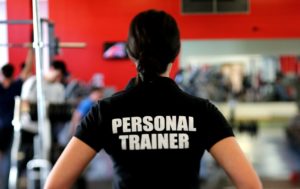
    photpersonaltrainerPresence of People: Work with a trainer. Workout with a partner who holds you accountable.  Join a class with positive people who lift you up.  Avoid toxic, unsupportive people as much as possible.


    photogymshoesPreceding Behavior: Have a specific pre-workout snack, put on your gym clothes, and listen to music that gets you in the mood to lift, cycle, run, Zumba, or whatever’s on the schedule that day. Exercising at the same time every day, after work, at lunch, or first thing in the morning, allows the activities you’re already doing to become the triggering behavior, like waking up or leaving work.

    You’ve scheduled your time at the gym, someone is there waiting for you, you’ve had a snack, you’re in gym clothes and listening to your favorite playlist. Now the important part, showing up, is a lot easier.

    Need help committing? Email me!

    Alicia Cross is a Certified Personal Trainer, Wellness Coach, and Yoga Instructor with more than 15 years’ experience working with clients in classes and one-on-one.  She is a yogi, meditator, vegan, and lifter of heavy things. If you’re ready to discover the strength and peace that comes from within, email Alicia@AliciaCrossTraining.com.

    Related Posts:

    Even the Trainer Needs Motivation

    https://aliciacrosstraining.com/mcluck-casino-sign-up-bonus/

  • Even the Trainer Needs Motivation

    Screen Shot 2017-03-20 at 1.11.25 PMQ: A colleague asked “How do you stay motivated in your own training?”

    A: Sometimes it’s tough to find motivation for myself after a day of motivating other people. Here’s what helps me stay on track:


    • Having someone else write my programming. Not just for the accountability factor, but also so I don’t have to plan what I’m doing that day. I get to the gym and follow my program.
    • Scheduling rest and planning rejuvenating activities like a relaxing get away or a massage. It’s a lot easier to convince myself to hit the gym if I know a break is coming up.
    • Taking advantage of the time when I do have it because I know that some days will just be too busy to get to the gym. Since I know that exercising 4-5 days/week keeps me feeling good physically and mentally, I don’t like to waste a day where there is time for a workout.
    • Listening to my body. If it’s telling me that I really can’t pick up a heavy weight today, I do something different: go for a walk, focus on mobility, or make it an accessory day with core, body weight exercises, and bands.
    • I make a deal with myself that I can make it a short session or include some less demanding exercise as long as I get in a big lift (squat or deadlift).  This keeps me progressing in my lifts. And nothing’s more motivating than seeing my numbers go up.
    • Evaluating other areas of my life. Maybe the workouts aren’t the problem.  Is something else draining my energy?  How’s my work/life balance, sleep schedule, diet, daily routine of yoga, meditation, and journaling?
    • Remembering my ultimate goal, the reason why I do what I do: I want to be energetic, healthy, and strong for years to come.  And I want to inspire others to do the same.

    Do you need motivation or have a question about training? Email me!

    Alicia Cross is a Certified Personal Trainer, Wellness Coach, and Yoga Instructor with more than 15 years’ experience working with clients in classes and one-on-one.  She is a yogi, meditator, vegan, and lifter of heavy things. If you’re ready to discover the strength and peace that comes from within, email Alicia@AliciaCrossTraining.com.

    Related Posts:

    Be Accountable to You

    Check Your HRV and RHR Daily to Avoid Overtraining

  • The Cheese Defense

    canstockphotocheesejpg


    Me- I’m vegan.

    Other person- I could never do that.  I couldn’t give up cheese.


    I’ve heard this cheese defense often enough that it’s made an impression on me.  I don’t know why cheese is so special, I’ve been pretty happy with Daiya Shreds and nutritional yeast. I also don’t understand the logic: I don’t want to give up cheese, so I’m not going to give up anything.  I didn’t start out vegan.  As I began eating more healthfully and more mindfully, I eliminated things one at a time (like processed meats, non-organic meat and chicken and farm-raised fish, then all red meat).

    I don’t push veganism or vegetarianism on anybody.  I think my clients, friends, and family can vouch for me on this.  I guess people are used to the pressure to convert that comes from many of my cohorts so they launch into a preemptive strike with the cheese defense.  What I do preach is healthy, mindful eating.  This means fully considering your purchases and the affects your choices have on your health, your body, your emotional wellbeing, on your family, and on the planet. It also means taking time to prepare your food and sitting down to mindfully enjoy every bite of it.

    Maybe they’re confessing their cheese dependency because they’ve considered making changes to their diet and they think this prevents them from being vegan or vegetarian.  Let’s clarify the difference: vegans do not eat milk, cheese, yogurt, butter, ghee, eggs, and honey while vegetarians do.  Vegetarians welcome cheese-aholics!

    Nutrition, like a lot of things in life, is not an all-or-nothing deal.  Your diet doesn’t have be a hashtag.  You can follow a diet that’s pescetarian, flexitarian, plant based (mostly vegetables but includes some meat), go meatless Monday, or eat like a vegetarian for 3 days each week to experience many of the same health benefits vegetarians do.

    Need help incorporating more vegetables, beans, grains, nuts, and seeds into your diet? Email me to see if Nutrition Coaching is right for you!

    Alicia Cross is a Certified Personal Trainer, Wellness Coach, and Yoga Instructor with more than 15 years’ experience working with clients in classes and one-on-one.  She is a yogi, meditator, vegan, and lifter of heavy things. If you’re ready to discover the strength and peace that comes from within, email Alicia@AliciaCrossTraining.com.

    Related Post:

    Fix Your Nutrition in 10 Steps

  • Live Your Yoga Off the Mat Part 10 Ishvara Pranidhana

    C40B3C46-9B4E-4107-B602-268A05AAE84EIshvara Pranidhana, surrender, is the last of the Niyamas.  It means having faith that everything will always turn out exactly the way it’s supposed to.  Faith is not an excuse to sit idly by and let life happen to you, nor is it a fatalist “nothing I do matters anyway” philosophy.  It’s about balance: striving while being unattached to the results (Aparigraha).  As Dan Harris puts it in 10% Happier, “The final outcome is out of your control. If you don’t waste your energy on variables you cannot influence, you can focus much more effectively on those you can.”

    Act always as if the future of the universe depends

    on what you did while laughing at yourself for thinking

    that whatever you do makes any difference.

    -Buddhist saying  

    Here’s how I practice Ishvara Pranidhana in my life:

    When I’m in my head, worried about my difficulties, I reassure myself by remembering that I’m just a speck of dust in this universe and that my lifetime hardly measures on the timeline of existence.  This might sound depressing, but it’s not.  I’m comforted to know that I am part of something much bigger.  My struggles feel a little less oppressive.


    Cosmic Calendar.png
    By Efbrazil, CC BY-SA 3.0, Link

    When taking big, scary steps in my personal and professional life (Tapas), I get over my anxiety of failure and financial ruin by telling myself “If I’m meant to be hungry and homeless, I will be.”

    Ishvara Pranidhana gives me the courage to sign for a loan, to start my own business, to take on life’s next challenge.  Again, that might sound negative, but it’s not.  I’m embracing the risk while planning to work hard to be successful. I will not let me fear hold me back.

    Reflection (Svadhyaya) and practicing gratitude help me realize that everything has happened and is happening for a reason (Santosha). I’m in a good place personally and professionally, why would I want to go back (not that I could) and change anything in my past?  Maybe erasing that one hardship, that one “wrong” decision, that one painful year, would set my life on a different path and I wouldn’t be here now.  I’ve learned to reframe thoughts like “this happened/is happening to me” to “this happened/is happening for me.”

    I think of my life like a GPS navigation system: my destination is programed.  There will be detours, setbacks, and missed turns, but I trust that I will be rerouted to get where I need to go. I always know in my heart that I’m exactly where I’m supposed to be.

    Alicia Cross is a Certified Personal Trainer, Wellness Coach, and Yoga Instructor with more than 15 years’ experience working with clients in classes and one-on-one.  She is a yogi, meditator, vegan, and lifter of heavy things. If you’re ready to discover the strength and peace that comes from within, email Alicia@AliciaCrossTraining.com.
    Related Posts:

    Why I Meditate

    Practice the 8 Limbs of Yoga to Address the 5 Layers of Being

  • Live Your Yoga Off the Mat Part 9 Svadhyaya

    canstockbookSvadhyaya, self-study is the forth Niyama. This is the process of knowing ourselves, our true selves.  We practice Svadhaya by reading, learning, meditating, and reflecting.  As we study various subjects, from spirituality and philosophy, to science, art, and history, we understand ourselves better. A meditation practice helps us uncover the ego that is blocking us from seeing our true nature. Taking time for introspection and reflection reveals things about ourselves that we otherwise miss as we go through the motions of daily life. Svadhyaya is like cleaning out a closet.  We have to open all the boxes to see what we have. We look honestly at all parts of ourselves.  We can decide what to keep and what to let go of.

    If you want to study yourself –look into the hearts of other people.

    If you want to study other people –look into your own heart.

    –Friedrich Von Schiller

    Here’s how I practice Svadhyaya:

    I listen to inspiring and educational audiobooks and podcasts. I learn so much about life and myself listening to the hosts, guests, and authors. I understand myself better as they verbalize concepts I couldn’t express. It helps me to put my ideas and beliefs into words. Sometimes I feel affirmed or justified when I realized, it’s not just me.  Other times I’m enlightened to discover my own unique perspective.

    I have a daily breath-based, mindfulness meditation practice. On the cushion, I notice as thoughts arises and I return to my breath.  This practice has allowed me to see how active the ego is in my mind.  I’ve learned that I can’t control it, but I also don’t have to let it control me. Discovering the ego, hiding in plain sight, I can now look for what’s not the ego. And there I begin to find my true self.  This practice transfers to life off the cushion; I can respond rather than react, live less habitually, and determine for myself what really matters.

    I wind down at night by journaling.  I reflect on the events of my day. I have a weekly review every Sunday and a big review every 6 months.  Reading back through my entries is eye-opening; I can see patterns, pitfalls, and accomplishments that otherwise go unnoticed and unappreciated.

    Practicing Svadhyaya, I cultivate the longest and most valuable relationship I’ll ever have, the one with myself.

    Finally, up next in part ten: Ishvara Pranidhana, surrender.

    Alicia Cross is a Certified Personal Trainer, Wellness Coach, and Yoga Instructor with more than 15 years’ experience working with clients in classes and one-on-one.  She is a yogi, meditator, vegan, and lifter of heavy things. If you’re ready to discover the strength and peace that comes from within, email Alicia@AliciaCrossTraining.com.

  • Live Your Yoga Off the Mat Part 8 Tapas

    canstockphotocomfortzone

    Tapas, self-discipline, is the third Niyama.  Tapas literally means heat. Transformation requires heat.  Dough is baked in the oven to form bread, clay is fired in the kiln to create pottery, iron and glass are passed through the flames so that they may be molded and shaped. So too must we hold ourselves to the fire of self-discipline in order to reach our goals. We do this by getting out of our comfort zone and doing the opposite of what we like: Signing up for Restorative Yoga instead of Power or Hot Yoga, putting down the remote control and starting a journal, turning off the video game and spending time with people, swapping cookies for carrots, closing the laptop (when your done reading this post!) and unrolling your yoga mat.

    Through discipline comes freedom.

    –Aristotle

    Here’s how I practice Tapas in my professional and personal life:

    I stepped way out of my comfort zone when I started my business in 2014.  I could have taken the more secure route, but instead I dove into the unfamiliar world of self-employment.  It turned out to be the best decision.  Now that I feel comfortable in my business, I practice Tapas by writing these weekly blog posts. I’ve never considered writing one of my strengths, so I’m once again out of professional comfort zone, creating a new habit, and cultivating a new skill.

    A couple years ago, I would have said my ideal day started with sleeping in and ended with watching television.  I was not a morning person and I couldn’t get started without coffee. Then about 18 months ago, I started getting up a little earlier to meditate before my first cup of coffee.  I didn’t like feeling like I was dragging myself out of bed in the morning. I decided I needed to get to sleep earlier.  To break my nightly T.V. habit, I imposed a no-screen rule one hour before bed, no T.V., computer, tablet, or phone, and instead started journaling. Recently, I’ve been getting up even earlier to practice yoga before meditating.  Most days I awake before the alarm feeling refreshed.  In the past month, I decided to cut my caffeine down to ¼ my previous daily intake, something I never thought I would do. I drink more tea now.  It was rough for the first two weeks, but I have acclimated.

    Self-disciple is my life.  As a type A, introverted, slight workaholic who relies on routine, and prefers to be in control, getting uncomfortable for me means doing something fun, adventurous, creative, or spontaneous.  I practice Tapas by saying YES when these situations come up in the form of invitations and opportunities.  I’ve gone tubing and rowing even though I’m afraid of water, I rode a roller coaster (never again!) just to say I did it, I’ve played Settlers of Catan (what?), I’ve done paint night and pottery painting even though I haven’t an artistic cell in my body. I look forward to life’s little adventures that take me out of my comfort zone, get me to try new things, go new places, have new experiences, and meet new people.

    Up next in part nine: Svadhyaya, self-study

    Alicia Cross is a Certified Personal Trainer, Wellness Coach, and Yoga Instructor with more than 15 years’ experience working with clients in classes and one-on-one.  She is a yogi, meditator, vegan, and lifter of heavy things. If you’re ready to discover the strength and peace that comes from within, email Alicia@AliciaCrossTraining.com.

  • Live Your Yoga Off the Mat Part 7 Santosha

    canstockphoto20471160

    Santosha, contentment, is the second Niyama.  Being content means being happy with the present moment just as it is.  It’s knowing that happiness comes from within and that no one or nothing external can make us happy.  Santosha is about accepting without judgement and moving past the mindset that says I’ll be happy when... But how do we really experience unconditional, intrinsic happiness?  Luckily, it’s not necessary to have been born happy or even to have had the perfect childhood. Happiness is a skill we all can acquire with consistent practice.

    Here’s how I cultivate Santosha:

    Contentment starts with gratitude. I end every day with a gratitude journal. I list as many things I can think of, big or small, that I’m thankful for that happened throughout my day: waking up refreshed before the alarm, finding time to read, an awesome lift, a great session with a client, having fun with a friend, a delicious lunch, students sharing how yoga has helped them in their life, my beautiful home, living my dream every day, and all the wonderful people in my life.  As I make this list night after night, it’s rewiring my brain. This habit changes the way I think and feel from day to day. Gratitude is not only the cure for unhappiness, it’s also the best prevention.

    I avoid insatiable materialism and the need to keep up with the Joneses (also an Aparigraha practice) by steering clear of home improvement shows and fashion magazines.  The marketing these media depend on preys on the I’ll be happy when mindset. Without this in my life, I don’t feel inadequate because I don’t have the perfect faucet or the latest pair of shoes.

    Happiness is not having what you want. 

    It is wanting what you have.

    -Rabbi Hyman Schachtel

    I’m working equanimity by letting go of judgements.  And not just complaints like this is the worst or I hate this, I’m also on the lookout for accolades like this is my favorite or this is the best. If I’ve classified something as my favorite or the best, I’m setting myself up for disappointment if I don’t get it.  Instead, staying neutral with whatever comes keeps me on an even keel. I experience much more happiness when I’m not at the mercy of life’s unpredictable highs and lows.

    Every day I work on cultivating the mindset that happiness comes from within.  This is best summed up in the saying The one who holds the key to your happiness is your jailer.  I have taken back my key and freed myself.

    Up next in part eight: Tapas, self-discipline.

    Alicia Cross is a Certified Personal Trainer, Wellness Coach, and Yoga Instructor with more than 15 years’ experience working with clients in classes and one-on-one.  She is a yogi, meditator, vegan, and lifter of heavy things. If you’re ready to discover the strength and peace that comes from within, email Alicia@AliciaCrossTraining.com.

  • Live Your Yoga Off the Mat Part 6 Saucha

    The Niyamas, or observances, tell us what qualities to cultivate.  Saucha, cleanliness or purification, is the first Niyama. We cleanse the external by picking up after ourselves at the yoga studio; putting our weights away when we’re finished at the gym; and keeping our home clean and uncluttered.  We purify the internal with meditation; being discriminating about what watch, read, listen to, and say; and by maintaining a healthy body with a nutritious diet, yoga, and exercise. Saucha also means keeping different energies separate. For example, we keep a work-life balance by not bringing work home with us at night and by leaving the phone off during family dinners.

    A place for everything, everything in its place.

    -Benjamin Franklin

    Here’s how I practice Saucha in my personal and professional life:

    I keep my home, for the most part, neat and organized.  One of my goals for this year is to declutter a space I use for storage.  I also practice Saucha by keeping areas energetically “clean.” I have dedicated spaces for different activities: an office space for work, a corner with my altar, yoga mat, and meditation cushion for my morning routine, the living room is home for my one T.V., and I’ve been sitting at my dining room table more and more lately to enjoy my meals.

    In the studio and at the gym, I use my own mat and blocks for yoga, I never walk on someone else’s yoga mat, and after class or a workout, I return everything to its place, even if that’s not where I found it.

    I practice Saucha in my physical body with my daily routine and habits. I eat a vegan diet that’s mostly organic whole foods. I’ve rid my kitchen of plastic containers and I make my own skin care products to avoid toxic chemicals.  I exercise, practice yoga, and incorporate Ayurvedic techniques like tongue scrapping and eating for my dosha.

    I keep my mind pure with daily inspirational readings and meditation, I avoid inflammatory news programs, trashy magazines, and “reality” T.V.  I instead choose enlightening audiobooks, interesting documentaries, informative podcasts, and movies and shows that make me laugh.

    Practicing Saucha helps me maintain balance in my life, be more present, and avoid multitasking.  It reminds me that if I wouldn’t sleep at the dining room table, then I shouldn’t eat in bed, if I wouldn’t do burpees while having tea with a friend, then I shouldn’t check social media during my workout.  It teaches me that there’s a time and place for everything.

    Up next in part seven, Santosha, contentment.

    Alicia Cross is a Certified Personal Trainer, Wellness Coach, and Yoga Instructor with more than 15 years’ experience working with clients in classes and one-on-one.  She is a yogi, meditator, vegan, and lifter of heavy things. If you’re ready to discover the strength and peace that comes from within, email Alicia@AliciaCrossTraining.com.