Blog

  • Falling Off the Fitness Wagon?

    sparkler


    Is your enthusiasm for exercise fizzling out?  Are there more excuses than workouts lately? If you feel your routine slipping and you want to do something about it, here is my best advice to avoid completing falling off the fitness wagon.


    • Evaluate your current stats: Record your weight, body fat percentage, resting heart rate, blood pressure, recent blood sugar or cholesterol levels, and/or your current 1RM’s (1 rep maximums) for squat, deadlift, bench, etc. Know where you’re at right now today.
    • Revisit your goal: What are you training for? An event (a race, a wedding, a reunion), to lose 10 pounds, to lower blood pressure, to hit that PR (personal record) at the gym? Remind yourself why you started. No goal? Set a SMART goal now.
    • Review your progress: Where were you six months ago?  Twelve months ago? Change is difficult to see because it happens so gradually over time. Step back and appreciate how far you’ve come.
    • Consider everything else: How is the rest of your daily routine? Maybe the workouts are suffering because something else is sabotaging your time or energy? Are you taking vitamins, drinking enough water, getting enough sleep, eating healthy? Falling out of the habit with these negatively impacts your energy and mood. If you’re dehydrated, going out to lunch every day, and running on 4 or 5 hours of sleep, crushing a workout is not going to happen.
    • Take action now: Do something today that moves you closer to your goal. Set yourself up for success by starting small: drink more water, eat a salad, foam roll tonight, go to bed on time. There is always something that can be done today, even if there’s no time for a workout. Continue to build the momentum day after day one step at a time.

    The only thing harder than keeping up with a routine is starting over again. If you feel yourself on a downward spiral, intercept it now. Don’t give up on yourself or your goals.

    Alicia Cross is a Certified Personal Trainer, Wellness Coach, and Yoga Instructor with more than 15 years’ experience working with falcon vegas casino bonus code in classes and one-on-one.  She is a yogi, meditator, vegan, and lifter of heavy things. If you’re ready to discover the strength and peace that comes from within, email lucky ducky slot machine tricks.

    Related Posts:

    There is No One Thing

    Five Cues to Trigger the Exercise Habit

    Even the Trainer Needs Motivation

  • 6 Yoga Poses For Your Back VIDEOS

    Thinking about yoga for your back pain?  Here are my favorite flows and stretches to take care of an achy back.  You can practice these everyday.  Try them in morning, before bed, or after a workout.

    Alternating Spinal Balance: If you don’t have a dowel, imagine you’re balancing a pot of hot green tea on your back as you more through this flow 8-12 times.

    https://www.instagram.com/p/BCJyKoRlU3r/?taken-by=aliciacrosstraining

    Cat/Cow Flow: Inhale as you arch into cow and exhale as you round into cat. Complete 8-12 rounds.

    Kneeling Lunge/Half Split Flow: Use blocks to maintain a neutral spinal throughout this flow.  Complete 8-12 rounds each side.

    Bridge Flow: Exhale to lift into bridge and inhale to roll back down. Complete 8-12 repetitions.

    Supine Spinal Twist: Drop knees to one side while looking and reaching to the opposite side.  Hold each side for 10 deep breaths.

    no deposit bonus codes ignition casino

    Figure 4 at the Wall: Flex the foot to protect the knee. Keep the spine neutral on the mat.  Hold each side for 10 deep breaths.

    does neverland casino pay real money

    Post your questions about yoga in the comments below.  See you on the mat!

    Alicia Cross is a Certified Personal Trainer, Wellness Coach, and Yoga Instructor with more than 15 years’ experience working with falcon vegas casino bonus code in classes and one-on-one.  She is a yogi, meditator, vegan, and lifter of heavy things. If you’re ready to discover the strength and peace that comes from within, email lucky ducky slot machine tricks.

    Related Posts:

    Full Body Static Stretch Video

    How to Foam Roll Video

  • You Can’t Out-Exercise a Bad Diet

    Did you start exercising to lose weight? How’s it going? Chances are, you’re looking more “toned,” you have more energy, you’re sleeping better a night, aches and pains have subsided, you have more confidence, and maybe your clothes fit better.  But the scale hasn’t budged.

    Don’t cancel your gym membership or fire your trainer, blame it on human biology.  In a study done by Herman Pontzer and others, the energy expenditure of traditional hunter-gatherers in Tanzania was compared to the energy expenditure of sedentary Westerners.  Surprisingly they found that all people, no matter where they’re from or how active they are, burn about the same amount of calories in a day.

    What does this mean for you and your weight-loss goals?

    The truth is, you can’t burn off the excess calories from a bad diet regardless of how many 2-a-days you log at the gym. If you’ve been in the gym for a while, you know this.  You’ve seen the regulars there day after day attending all the classes, sweating all over the ellipticals and treadmills, deadlifting and squatting heavier and more impressive weights with their trainers. And still only couple experience real transformation. What sets these outliers apart is that they made changes to their diet.  Maybe they eliminated that one vice: soda, fast food, alcohol, desert, or processed carbohydrates. Maybe they began tracking everything they ate. Maybe they followed a specific diet. The point is, they did not do it with exercise alone.

    Evidence points toward obesity being a disease of gluttony rather than sloth.

    —Herman Pontzer

    This doesn’t mean exercise can’t help support your goals.  Cardiovascular exercise and strength training will help you maintain a healthy body weight and avoid weight gain (especially weight gain that comes with age).  Both also improve your health and your quality of life (probably high up on list of reasons you started exercising).

    What cardiovascular exercise can do for you:

    • Improves memory and focus
    • Strengthens heart and lungs
    • Elevates mood and helps alleviate anxiety
    • Reduces the risk of high BP, diabetes, and other chronic and often preventable conditions
    • Helps control blood sugar
    • Helps maintain a heathy weight
    • Boots energy all day long

    What strength training can do for you:

    • Increases basal metabolic rate by increasing lean muscles mass (burn more calories all day long)
    • Preserves muscle that is otherwise lost with age (3-5% each decade after age 30)
    • Strengthens bones
    • Reduces risk of falls and injury
    • Decrease pain and tension especially from overuse and muscular imbalances
    • Improves your appearance as posture and “tone” improve
    • Helps control blood sugar
    • Boots self-confidence

    So keep hitting the weights and breaking a sweat in addition to fixing your nutrition. You’ll be on your way to reaching your weight-loss goals!

    Need help figuring it all out? Email me!

    Alicia Cross is a Certified Personal Trainer, Wellness Coach, and Yoga Instructor with more than 15 years’ experience working with clients in classes and one-on-one.  She is a yogi, meditator, vegan, and lifter of heavy things. If you’re ready to discover the strength and peace that comes from within, email lucky ducky slot machine tricks.

    Related posts:

    What Should I do First? Strength or Cardio?

    Exercise is as Good for the Brain as it is for the Body

  • Why I Meditate

    canstockphotomeditationI don’t have visions or hear voices when I meditate. I can’t really say I’ve felt a “sense of oneness.” I’m not striving for enlightenment or trying to achieve a state of perpetual euphoria.  And I’ve yet to empty my mind (my favorite misconception about meditation). My reason for meditating is much more practical: I meditate to feel less bad.

    You should sit in meditation for 20 minutes a day,

    unless you’re too busy; then you should sit for an hour. 

    —Zen Saying

    I’m still a newbie; I’ve been meditating for about 18 months.  In this short time, the effects of my practice have transferred off the cushion and into my daily life. The most beneficial effect has been a decrease in unfavorable emotions and negativity.

    Lately, I feel less rushed and anxious. I have a sense of having more time in the day. I have time to sit down and eat meals at the table rather than always eating in my car between appointments. I’m no longer overwhelmed by an unending to-do list and the feeling that I can never catch up. I’m accomplishing more without sacrificing anything. I have more energy.  I’m getting more sleep, and usually waking before the alarm sounds.  I don’t feel drained at the end of my day. I’m no longer dragging myself through my workouts or turning down social invitations because I’m too wiped out by the weekend.

    An unexpected transformation has been the improvement in my self-talk and my evaluation of the external world.  My inner critic, or the Gremlins as Maryam Pasha calls them in her TEDx talk, have gotten much less threatening lately. When I’m less critical of myself, I’m less critical in general.  Whenever I hear the judgmental voice starting to chime in, I preempt it with one of my mantras “We’re all just doing the best we can” or “Everything always works out in the end.”  My mediation practice is teaching me to pause before acting, speaking, emailing, or posting and to ask myself “Why are you here?,” or “What is your goal?” This is my way of making sure my short-term actions align with my long-term goals.  I’ve also found these two questions helpful for intercepting negative criticisms.  Sincerely living these ideals rather than paying them lip service, eliminates so much unnecessary stress and conflict (internal and external).

    Because of my meditation practice, I have more energy, less stress, and less negativity in my life.  This is the foundation that allows me to focus on what’s important: happiness, growth, taking care of myself, cultivating relationships, being present for my clients, and enjoying life. I meditate because it makes my days, and my life, happier.

    Alicia Cross is a Certified Personal Trainer, Wellness Coach, and Yoga Instructor with more than 15 years’ experience working with falcon vegas casino bonus code in classes and one-on-one.  She is a yogi, meditator, vegan, and lifter of heavy things. If you’re ready to discover the strength and peace that comes from within, email lucky ducky slot machine tricks.

    Related Post:

    There Is No One Thing

  • You Can Lie About Your Age, But Your Heart Rate Can’t

    heartbeatgreenYour chronological age is the number of birthdays you’ve celebrated. You can lie about it, but you can’t change it. Your biological age, your REAL age, is more malleable.  It’s influenced by lifestyle, nutrition, exercise, stress management, sleep hygiene, and other factors all under your control.  If you want to know how old you REALLY are, don’t look in the mirror, look at your heart rate.  Your biological age is determined by how healthy you are on the inside, especially your cardiovascular system (the heart and blood vessels).  One way to measure the health of your heart and to determine your biological age is with Heart Rate Recovery.

    Heart Rate Recovery is a measurement of the decrease in heart rate after a two-minute cool down following a bout of vigorous exercise. The more fit you are, the more efficient the cardiovascular system, and the faster the heart rate will decrease.


    Test yours:

    Spend about ten minutes gradually increasing your heart rate to 80% of your maximum with any activity: running, cycling, rowing, or on the elliptical. Once there, record your heart. Then bring the level of the activity way down to begin the two-minute cool down.  This might even mean getting off the bike or the elliptical and walking around.  Do not sit still, instead keep the activity very light.  In exactly two minutes, check and record your heart rate again. Subtract this number from the first heart rate reading to get your results.

    If the difference between the two numbers is:

    • Less than 22: Your biological age is slightly older than your chronological age.
    • 22–52: Your biological age is about the same as your chronological age.
    • 53–58: Your biological age is slightly younger than your chronological age.
    • 59–65: Your biological age is moderately younger than your chronological age.
    • 66 or more: Your biological age is a lot younger than your chronological age.

    A recovery of less than 12 beats per minute is associated with a higher risk of death from heart disease.  If you’re concerned with your results, it’s time to make some changes: start an exercise program that includes strength training and cardiovascular training, clean up your nutrition, sleep 7-9 hours every night, and manage your stress with yoga and meditation.

    Take these steps to get healthier on the inside and your good health will radiate outward.  You’ll begin to look and feel younger!

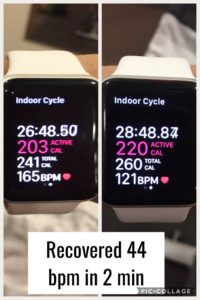
    Check out my results.  Share yours in the comments below.

    myrecoveryheartrate


    Alicia Cross is a Certified Personal Trainer, Wellness Coach, and Yoga Instructor with more than 15 years’ experience working with falcon vegas casino bonus code in classes and one-on-one.  She is a yogi, meditator, vegan, and lifter of heavy things. If you’re ready to discover the strength and peace that comes from within, email lucky ducky slot machine tricks.

    Related Post:

    Check Your HRV and RHR Daily to Avoid Overtraining

  • Know Your Zones: Heart Rate Training Zones

    smartwatchcanstockphoto

    Do you check your heart rate on your smart watch or activity tracker during workouts?  Do you know what it means or where it should be?  Heart Rate Training Zones are based on percentages of your maximum heart rate.  To figure out your Zones, you’ll need to find your maximum heart rate and your corresponding heart rate for the percentages described below. Enter your age and your resting heart rate in this calculator and take a screen shot of your results.

    The Zones:

    Zone 1: Aerobic (using oxygen). Burning mostly fat for fuel. 

    65% Warm up/Cool down for 5 minutes each before and after every interval or steady state workout. Breathing in and out through the nose.

    70% Endurance. Low Intensity Steady State. Can hold a conversation.

    75% Endurance. Medium Intensity Steady State. Getting difficult to talk.

    Zone 2: Aerobic (using oxygen) Burning Fat/Carbohydrates for fuel.

    76% Intervals. Can’t hold a conversation.

    80% Intervals. Can’t hold a conversation. Lactic Threshold (LT) a.k.a. Anaerobic Threshold

    Zone 3: Anaerobic (w/o oxygen). Burning mostly Carbohydrates for fuel.

    85% Sprint/HIIT (High Intensity Interval Training)/Metabolic Conditioning (MetCon). Can hold for about 2 minutes.

    92% MAX EFFORT. ALL OUT SPRINT. Can hold for only 30 sec or less.


    Which Zone should you be in? The goal of every workout is not to elevate the heart rate as high as possible.  Spending too much time in Zone 3, working anaerobically, increases the likelihood of overtraining.  With overtraining comes greater risk of injury, decreased immunity, fatigue, burn-out, and forget about making progress or reaching your goals.

    Have a plan for the week based on the Zones.

    • We need at least one day per week of Steady State Zone 1 cardio. Aim for 30 minutes on the bike or the elliptical keeping the heart rate around 70%.  This is great the day after a really tough workout.
    • If you have time in your schedule for a second day of Steady State cardio, work at the upper end of Zone 1, 75%, for 20 minutes. Do this on the elliptical, cycling, jogging, rowing, or any activity that allows you to monitor and maintain your heart rate.
    • For higher intensity workouts in Zones 2 and 3, include intervals and MetCon’s no more than two days per week.
    • To successfully reach your health and fitness goals, it’s important to incorporate cardio and strength training into your routine. Plan cardio around two days of strength training. You can do cardio after weights if you’re planning on doing both on the same day.

    Now that you know your Heart Rate Training Zones, make a plan to reach your goals faster and safer.  Need help programming? Email me!

    Alicia Cross is a Certified Personal Trainer, Wellness Coach, and Yoga Instructor with more than 15 years’ experience working with falcon vegas casino bonus code in classes and one-on-one.  She is a yogi, meditator, vegan, and lifter of heavy things. If you’re ready to discover the strength and peace that comes from within, email lucky ducky slot machine tricks.


  • Check Your HRV and RHR Daily to Avoid Overtraining

    When we exercise, our heart speeds up, we sweat, muscles get tense, and our blood pressure rises.  We are in “fight or flight.” Introducing a bit of stress this way is beneficial: our muscles grow stronger, our bones become denser, immunity improves, as our heart gets more efficient resting heart rate decreases, and we become better able to cope with the stresses of life.

    Unless of course if we’re overtraining. Doing too much and taking too little time to rest and recover cancels out many of the health benefits of exercise.  How do we know if we are overtraining?  Heart Rate Variability (HRV) and Resting Heart Rate (RHR) are two markers we can easily check daily to monitor the effects of training and other stressors on the body.

    HRV,  refers to the time between consecutive heart beats.  A low HRV score means the heart beats are more consistent like the second hand on a clock.  This might sound good, but it isn’t.  Low HRV is associated with negative health issues such as heart disease, depression, PTSD, chronic stress, and anxiety.

    A high HRV score means there is greater variation in the time between heart beats.  High HRV is associated with greater resiliency and improved ability to self-regulate and adapt. A high HRV score is preferable because it signals that the Parasympathetic Nervous System, a.k.a. “rest and digest,” is in control. The PSNS is the counterpart to the Sympathetic Nervous System, “fight or flight.”  A low HRV score indicates that the SNS dominates, which means we’re spending too much time in “fight or flight.”  Whether it’s life, work, or the gym, something’s got us too stressed out. Pushing through another killer workout today is not the solution.

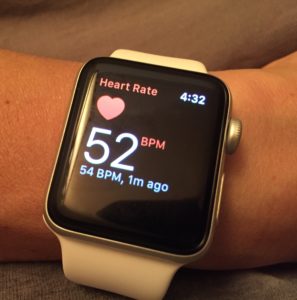
    RHRapplewatchResting heart rate, RHR, is expressed as beats per minute (BPM). 72 BPM is average, 50-55 BPM means we’re aerobically fit, and 40-50 BPM means we’re an elite athlete. If in the morning our heart rate is elevated above our normal RHR, that could signal that the body hasn’t finished recovering from the last workout and isn’t ready for another tough day at the gym.

    If we have chronically low HRV and a high RHR, we need more than just rest.  We must strengthen the PSNS, “rest and digest,” with yoga and meditation.  Both have been shown to bring many health benefits including improved HRV and decreased RHR.

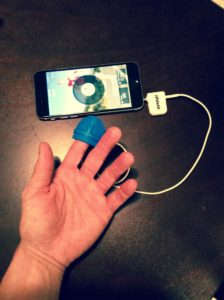
    img_4291I check HRV and RHR first thing every morning with the ithlete app .  I plug the finger sensor into my phone and get a reading in one minute. If I have a high score, I train hard, If I get a medium score, I know it’s a good day for accessory work or light cardio.  If a get a low score, I rest, go for a walk, or stretch.  Tracking my HRV and RHR has helped me not only in planning my training, but also in understanding how other factors, such diet, work, and sleep, influence my recovery.

    Post your resting heart rate and your questions about recovery in the comments.

    Alicia Cross is a Certified Personal Trainer, Wellness Coach, and Yoga Instructor with more than 15 years’ experience working with falcon vegas casino bonus code in classes and one-on-one.  She is a yogi, meditator, vegan, and lifter of heavy things. If you’re ready to discover the strength and peace that comes from within, email lucky ducky slot machine tricks.

    Related Post:

    Q&A:Two-A-Days

  • Hatha Yoga Timeline

    yogafrog

    Q: Does practicing Yoga make you a Hindu?

    A: Great question! You can subscribe to any religion, philosophy, or spiritual practice or to none at all and experience the healing benefits of Yoga. Yoga now mostly means a class we attend or a series or flow of postures (asanas). The word Yoga comes from yoke, meaning to join.

    “Yoga means yoking the finite, mental consciousness to infinite consciousness.”

    From The Living Gita

    Yoga helps us create connections:  maybe we feel disconnected from our body because we spend too much time in our heads for work or school; maybe we feel disconnected from our emotions because we never learned that it was ok to feel our feelings; maybe we long for connection to other people or to something greater than ourselves.  Where ever we are on our journey, the practice of yoga can help.

    Here is a summary of how the ancient practice of yoga become the modern yoga we love today:

    The Vedas (ved = truth, knowledge), ancient Hindu texts, were written as far back 2500 B.C.E. and before that, passed down orally. There are four main books and each is divided into four main parts, including the Upanishads which is the last and most important of each.  It is in the Upanishads that Hatha yoga is mentioned.  Ha=sun, which represents prana, and Tha=moon, which represents the mind. The goal of Hatha Yoga is to balance body, mind, and energy.  All yoga we practice in a class or on a mat today is Hatha Yoga.

    Bhadavad Gita, written 500-100 B.C.E. is found in the Vedas.  It focuses on the paths of Karma Yoga (selfless service), Bhakti Yoga (devotion), and Jnana Yoga (knowledge).  Sloka 2.48 defines yoga as “equanimity of the mind.”

    The Yoga Sutras of Patanjali, written c. 200 C.E., focus on the path of Raja Yoga (mastering the self and controlling the mind). Raja means royalty or king and is synonymous with Ashtanga Yoga (ashta=eight, tanga=limbs). Patanjali’s eight limbs were influenced by Buddha’s Eightfold Path:

    1. Yama: Non-harming, truthfulness, non-stealing, moderation, and non-attachment
    2. Niyama: Cleanliness, contentment, self-discipline, self-study, surrender
    3. Asana: One sutra about postures, 2.46: “Sthira Sukham asanam.” Posture is steady and comfortable.
    4. Pranayama: Expansion of vital life force a.k.a breath practices
    5. Pratyahara: withdraw from the senses
    6. Dharana: concentration
    7. Dhyana: meditation
    8. Samadhi: Nirvana, enlightenment

    Up until about 900-1000 C.E., yogis were mostly focused on meditation and believed that the body was a hindrance to enlightenment.  Then Hatha yoga, a system to prepare the body for meditation, became popular. Hatha Yoga Pradipika, written between 500-1400 C.E., outlines pranayama, 84 asanas, shatkarma (cleansing techniques such as neti pot), mudras, and bandhas. Hatha yoga is the practice of limbs 3-8.

    Yoga philosophy was introduced to the U.S. when Swami Vivekananda spoke at The Parliament of Religions in Chicago in 1893. His message of oneness resonated. In the book Pathways to Joy, he outlines the four main paths of yoga Karma Yoga, selfless service, Bhakti Yoga, devotion, Jnana Yoga, knowledge, and Raja Yoga, controlling the mind (Raja Yoga a.k.a Astanga Yoga of which limbs 3-8 are Hatha Yoga).  He says “Both the goal and the method employed for reaching it are called yoga.”  There are six systems of Indian philosophy, including Yoga and Vedanta. Vedanta, which focus on the philosophical teachings of the Upanishads, is the message Vivekananda was sharing.

    Back to the Hatha Yoga lineage: There we find Krisnamacharya (1888-1989), teacher to his son T.K.V. Desikachar (1938-2016), who teaches Pattabhi Jois (1915-2009) and B.K.S. Iyengar (1918-2014).  Pattabhi Jois develops a series of poses he calls Asthanga (not to be confused with Patanjali’s Ashtanga Yoga).  This is where we get the Vinyasa flow we love.  Most importantly, Yoga is practiced here today thanks to B.K.S. Iyengar and his 1960’s book Light on Yoga. In it, he outlines pranayama, bandhas, and 200 asanas.  He is credited with bringing the physical practice to the West.

    This is just a summary. There are many other systems and teachers that influence the practice today. I hope this basic timeline inspires you to learn more and brings even more depth and meaning to your practice.

    Namaste

    Alicia Cross is a Certified Personal Trainer, Wellness Coach, and Yoga Instructor with more than 15 years’ experience working with falcon vegas casino bonus code in classes and one-on-one.  She is a yogi, meditator, vegan, and lifter of heavy things. If you’re ready to discover the strength and peace that comes from within, email lucky ducky slot machine tricks.

    Related Posts:

    Practice the 8 Limbs of Yoga to Address the 5 Layers of Being



  • There Is No One Thing

    ax-595976_1920

    In Real Happiness, Sharon Salzburg says that meditation is like “trying to split a huge piece of wood with a small ax.  You hit that piece of wood ninety-nine times and nothing happens. Then you hit it the one hundredth time and it splits open.”


    She adds that it wasn’t the hundredth hit that split the wood, it was the culmination of all our efforts.  And not just the effects the other strikes had on the wood, but also the effects the process had on us: We are transformed, our will is fortified, we become more patient, stronger, and we learn throughout the experience.

    This analogy applies to any endeavor, not just attaining enlightenment. By putting in the work day after day, little by little we move closer to where we want to be.  Along the way, we are changed so subtly that we don’t even notice it’s happening. While slow and difficult, this process is necessary. If we attempt to shortcut the process and by chance it works, success will be short-lived because we didn’t evolve along the way.

    You can’t skip ahead. There is no one thing to buy to be happy, no one pill to take for health, no one course to attend to be successful, no one exercise to do for a tighter/flatter/bigger whatever-body-part. There is no one thing. There is only work, consistent work.

    Do the things you can do every day to move you closer to your goals of happiness, health, and success. What are those things?  You already know:  It’s the big things you’re contemplating and the little things you’ve been avoiding.

    Start today.  Start right now.  Pick up the ax, or the dumbbells, or the book, or the mala beads, or the carrots sticks and keep doing it over and over again until you’ve split the wood.

    Alicia Cross is a Certified Personal Trainer, Wellness Coach, and Yoga Instructor with more than 15 years’ experience working with falcon vegas casino bonus code in classes and one-on-one.  She is a yogi, meditator, vegan, and lifter of heavy things. If you’re ready to discover the strength and peace that comes from within, email lucky ducky slot machine tricks.

    Related Post:

    Be Accountable to You

  • Weightlifting Belt for Back Pain?

    Q: My back hurts when I deadlift.  Should I wear a weightlifting belt?

    weightliftingbelt


    A: The purpose of a weightlifting belt is performance enhancement, not injury prevention. When used correctly, it creates additional intra-abdominal pressure to support the back through a lift. The belt is worn for compound exercises like squats, deadlifts, Olympics lifts and their related exercises (overhead squats, clean pulls, etc.) when working at 85/90%+ of your 1RM (repetition maximum). If your goal is to lift more weight, a weightlifting belt can help. The belt, however, is not a substitute for body awareness, proper technique, the ability to brace through the core, and a solid foundation of strength. The majority of gym-goers and fitness enthusiast will never need a weightlifting belt. The intra-abdominal pressure produced by the Valsalva maneuver is sufficient to protect the back during the lifts performed by most non-competitive athletes.

    If you are injured or in pain, your primary goal is to take care of yourself, not to set a new deadlift PR (personal record). For back pain, rule out any major issues with your physical therapist or chiropractor. 80% of people will experience back pain at some point in their life and the overwhelming causes will be sprains and strains. If that’s your prognosis, you’ll benefit from strengthening the muscles of your abs and back (the core). Your program might include deadlifts, but at an intensity (i.e. weight) that doesn’t cause pain. Since that probably means working well below 85%, a weightlifting belt is not necessary.  Also, if you’re relying on the belt during deadlifts, that could defeat the purpose that exercise: strengthening the core, learning how to stabilize, and creating body awareness.

    I have been there. I know how difficult it is to scale back your programing and to train around an injury. I also know how good it feels to return to training free from pain.  And that’s the ultimate goal.  If you’re not a competitive athlete, you’re probably training to look and feel amazing.  And for that, no belt required.

    Does your program have you looking and feeling amazing?  If not, email me!

    Alicia Cross is a Certified Personal Trainer, Wellness Coach, and Yoga Instructor with more than 15 years’ experience working with falcon vegas casino bonus code in classes and one-on-one.  She is a yogi, meditator, vegan, and lifter of heavy things. If you’re ready to discover the strength and peace that comes from within, email lucky ducky slot machine tricks.

    Related post:

    6 Yoga Poses For Your Back