Blog

  • Want Healthy Habits? Don’t Forget to Treat Yo’ Self!


    One of the most important habit formation strategies you can adopt is from Gretchen Rubin’s book Better Than Before. It’s the strategy of TREATS.  Rubin explains that treats differ from rewards because rewards have to be justified and treats are little indulgences that you get no matter what.


    What’s the problem with rewards?

    carrotandstickIn Drive: The Surprising Truth About What Motivates Us, Daniel H. Pink calls the carrot and stick method (reward and punishment) Motivation 2.0. Motivation 2.0 works, but only for tedious tasks. Bribing yourself to exercise, eat healthy, or grow professionally will backfire. For these goals, you need intrinsic motivation or Motivation 3.0. One key element of Motivation 3.0 is PURPOSE. Remembering why you started will keep you going more than the promise of a reward.


    But the brain needs a reward to solidify a habit.

    In The Power of Habit, Charles Duhigg explains the science of habit formation with the habit loop: CUE, ROUTINE, and REWARD. For example, you get up every morning (cue) and make coffee (routine) and you get a cup of fresh, hot coffee (reward). Here, the reward is inherent to the activity and it’s what seals the deal. You brain wants that reward and it will make it easy for you to get up and make coffee without question or decision by making it a habit.


    How does this apply to the habit of exercise?

    Exercise is tough habit to form because the inherent rewards of exercise are not immediate.  If you’ve ever checked your abs in the mirror after one set of crunches or weighed yourself after a workout, you know that it doesn’t work that way. The habit loop isn’t closed in one session. You have to stick with it long enough to see and feel the benefits. And that’s the challenge.  You might try to create the reward for yourself by indulging in unhealthy foods after a workout with the justification of “I earned this.”  Or you might go completely off the rails Friday through Sunday thinking “it’s the weekend.”  But as Kelly McGonigal writes in Willpower Instinct, even though we think we deserve a reward, it’s the reward that’s actually sabotaging our success.


    http://gph.is/13GEin6

    How do treats help?

    Forming the habits of eating healthy and going to the gym take willpower. Exerting willpower is exhausting. Do you make good decisions around food and exercise when you’re exhausted? You need to rejuvenate yourself and replenish your willpower supply so you have the energy to maintain your habits and reach your goals. Treating yourself is an important part of your rejuvenating self-care routine.  Some of my favorite treats are pizza, movies, and massages. I have realized that I don’t have to earn pizza, I don’t have to wait until everything is crossed off my to-do list to relax and watch a movie, and I don’t have to deserve a massage. I enjoy my treats guilt-free because as McGonigal points out, guilt leads to seeking comfort from food or from other bad habits. And that in counterproductive to reaching my goals.

    How do you treat yo’ self?


    Alicia Cross is a Certified Personal Trainer, Wellness Coach, and Yoga Instructor with more than 15 years’ experience working with clients in classes and one-on-one.  She is a yogi, meditator, vegan, and lifter of heavy things. If you’re ready to discover the strength and peace that comes from within, email Alicia@AliciaCrossTraining.com.

    Related Posts:

    What Drives You? Intrinsic Versus Extrinsic Motivation

    Five Cues to Trigger the Exercise Habit

    7 Habits to Start Creating Right Now
     

  • casino near land o lakes wi

    treasure island casino gamesDo you want to know the secret to having great days, to having more time and energy to workout, to being more productive, to making healthy choices all day long? The secret is: A great day starts the night before. Here are my 10 tips to make tomorrow amazing!


    1. Sleep (quantity). Like it or not, you need 7-9 hours of sleep. Figure out what time you need to wake up, count back from there. That’s your bedtime.  Any additional time to you stay up tonight, is just energy, success, willpower, and productivity stolen from your tomorrow.


    1. Sleep (quality). Sleep is two tips because it’s that important. Ensure good quality sleep by cutting out caffeine after a specific time (you know what works best for you), saying no to alcohol, and avoiding heavy meals close to bedtime.


    1. Make tomorrow’s To-Do List and review appointments. What do you need to do tomorrow? What do you need to bring? Make a list, lay it out, get it off your mind, and save yourself from scrabbling tomorrow morning.


    1. Stop working and turn off all screens one hour before bed. The blue light emitted from phone, computer, and television screens signals to your brain that it’s time to wake up. Working or watching the news is not a relaxing bedtime routine. Instead, use this time to tackle the rest of this list.


    1. Prep your coffee. Program your coffee maker or get it ready. Invest in a good travel mug, like this one that will keep your coffee hot, and I mean hot, all day!  You’ll save time and money avoiding the daily coffee run.


    1. Prep your breakfast. You know you perform better and make healthier choices all day long when you start with a good breakfast. Meal-prep breakfast at the beginning of the week by making hardboiled eggs, breakfast casserole, or a big batch of high protein oatmeal. Or, the night before, get your smoothie ready to blend. Find what works for you, but skip the baked goods and sugary cereals and yogurts.


    1. Pack your lunch. Save money, time, and calories by meal-prepping on the weekend and packing up your lunch for the week. Stock up on easy-to-pack fruit and veggies (like apples, bananas, and baby carrots), protein bars, and single-serve pack of nut butter, hummus, and nuts.


    1. Lay out your gym clothes. If you’re hitting the gym first thing in the morning, have everything ready. If you’re working out at lunch or after work, pack up your gym bag. Do not listen to the voice in your head that says I’ll just come and change after work on my way to the gym. That voice is the destroyer of fitness dreams.


    1. Pick out your outfit. Decide on your clothes, shoes, and accessories for tomorrow. If you want to make getting ready even easier, get a uniform or try the Project 333 method.


    1. Reflect. Use the last few minutes before bed to journal, make a gratitude list, and/or read for pleasure or enlightenment. Instead of journaling online or in an app, journal the old fashion way, with pen and paper. Skip e-readers and instead read an actual book (they still make those!). Choose a work of fiction or an inspirational book that shifts your mind out of work mode.


    Commit to trying these steps for several weeks in order to see the benefits in your career, your health, and your overall happiness.  What other nighttime routines help you to wrap up your day, make your mornings as easy as possible, and prepare you for an amazing tomorrow?


    Alicia Cross is a Certified Personal Trainer, Wellness Coach, and Yoga Instructor with more than 15 years’ experience working with clients in classes and one-on-one.  She is a yogi, meditator, vegan, and lifter of heavy things. If you’re ready to discover the strength and peace that comes from within, email Alicia@AliciaCrossTraining.com.


    Related Posts:

    What Drives You? Intrinsic Versus Extrinsic Motivation

    Falling Off the Fitness Wagon?

    Five Cues to Trigger the Exercise Habit


  • What is Fitness? Part 6: Speed, Agility, Quickness

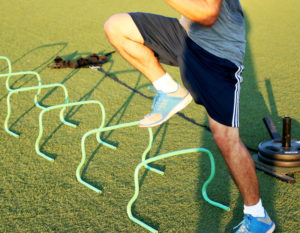
    What is Speed, Agility, and Quickness?

    hurdles

    Speed is the ability to perform a movement or move in one direction as fast as possible.

    Quickness is the ability to react and rapidly accelerate.  Quickness means you’re not just fast, you’re also explosive.

    Agility is the ability to change directions quickly while in motion. This requires deceleration, stabilization, direction change, and acceleration.  Because agility requires quickness and quickness requires speed, the skills overlap.  Often you can’t train one skill without training the other. This training is as much mental as it is physical.  Many of the adaptations happen in the nervous system: improving the efficiency, recruitment, and synchronization of the neuromuscular system.


    Who should train for speed, agility, and quickness?

    Athletes who need to react and respond to opponents perform sport-specific S/A/Q drills.  If you’ve played football, soccer, or basketball or seen the practices, you’re familiar with the drills. The conventional view is that speed, agility, and quickness are not necessary for general health. Studies show, however, that in older populations, gait speed can be a predictor of mortality and how social you are.  While your training might not resemble that of a wide receiver, it’s still important to your health and happiness goals. Even endurance athletes, like marathoners, will benefit from adding speed work to their training program.  And for the average gym-goer, adding some S/A/Q training can introduce a fun challenge.


    Training for Speed:

    • Add intervals to your run or cycling cardio days. If you are new to interval training, start with a 10-second sprint or running up a hill followed by a two-minute recovery.
    • Squat or Olympic lift faster. Drop the intensity way down (30-50% of your one rep maximum) and move quickly while maintaining full range of motion and proper technique.
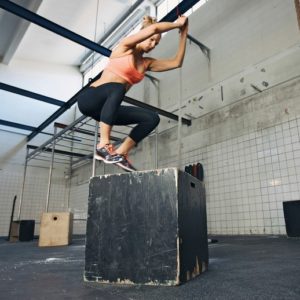
    • Perform plyometrics (like box jumps) with a quick rebound.
    • Sled push or pull intervals.


    Training for Quickness:

    • Perform short, explosive drills (10 seconds or less) from a dead stop. This differs from speed training where you can walk or jog between sprints.
    • Train your mind by practicing responding and reacting quickly to a signal or cue like a starting gun.


    Training for Agility:

    Now that you know the six components of fitness (cardio, flexibility, strength, balance, power, and S/A/Q), how fit are YOU?


    Alicia Cross is a Certified Personal Trainer, Wellness Coach, and Yoga Instructor with more than 15 years’ experience working with clients in classes and one-on-one.  She is a yogi, meditator, vegan, and lifter of heavy things. If you’re ready to discover the strength and peace that comes from within, email Alicia@AliciaCrossTraining.com.


  • What is Fitness? Part 5: Power

    boxjump1Power is the ability to produce maximal force in minimal time or strength x speed. Strength is the amount of force a muscle can exert against an external load. And speed is the ability to perform a movement or travel a set distance as fast as possible. Unlike other components of fitness (cardiorespiratory fitness, flexibility, strength, and balance), power is not required for general health goals.


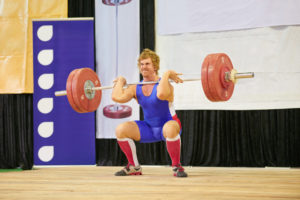
    cleancompetitionPower plus the barbell equals the Snatch and the Clean and Jerk.  The competitive sport is called Weightlifting and is an Olympic event. Remember that the competitive sport of strength involves the squat, deadlift, and bench press, is not an Olympic event, and just to keep it confusing, is called Powerlifting.  While the term weightlifting specifically refers to the Olympic sport of only two lifts, it has become a blanket term used to cover just about anything happening at the gym.  For clarification, the Snatch and the Clean and Jerk are often called Olympic lifting or Oly lifting.

    tireflip


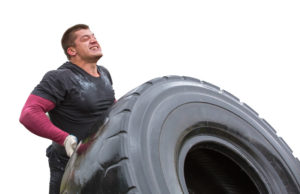
    Other examples of power sports are the Strongman and Strongwomen competition (with events like the keg toss, tire flips, and atlas stones) and Boxing. These require both strength and speed.  Athletes in other sports, like Football, Track and Field, Basketball, and Rowing, benefit from cross training with power movements like the Olympic lifts, and other exercises that combine strength and speed, such as kettlebell or medicine ball training, and plyometrics.


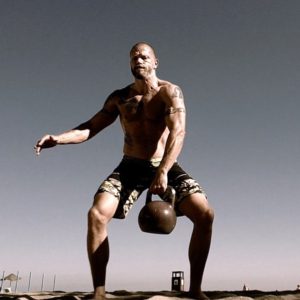
    kettlebellYou do not need to be a professional or competitive athlete to train for power. Power training, done in high volume (many repetitions) will improve your cardiorespiratory fitness, which is vital to your health. It can also keep your fitness routine fun and challenging.  If high-impact exercises aren’t the best for your body, try kettlebell training. If you’re bored with indoor cycling or the treadmill, try plyometrics or Olympics lifts to get your heartrate elevated. Got some stress you want to release at the gym? Slam a medicine ball a few dozen times and see how much better you feel.

    It’s important to respect power movements. To the average gym-goer watching videos online, the movements may look haphazard. They are in fact highly technical.  Power movements should not be attempted without a solid foundation of strength (especially core strength) and balance.  As these movements can pose a greater risk of injury, they should be learned from a qualified professional and practiced regularly.  Always prioritize technique over heavier weight, additional sets or repetitions, and advanced progressions.

    Up next, Speed, Agility, and Quickness.

    Alicia Cross is a Certified Personal Trainer, Wellness Coach, and Yoga Instructor with more than 15 years’ experience working with clients in classes and one-on-one.  She is a yogi, meditator, vegan, and lifter of heavy things. If you’re ready to discover the strength and peace that comes from within, email Alicia@AliciaCrossTraining.com.

    Related Post:

    Serious Relationship

  • What is Fitness? Part 4: Balance

    dancerpose2

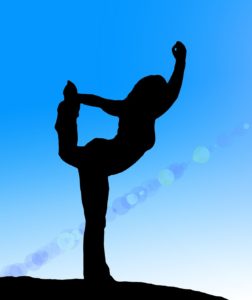
    Balance is the ability to maintain the body’s center of gravity over its base of support. Balance is both static (standing still or holding a yoga pose) and dynamic (walking, getting up out of a chair, dancing, or flowing in Vinyasa Yoga).


    Balance is achieved as the brain receives sensory input from three systems:

    • Visual: from the eyes
    • Proprioceptive: from special receptors in skin, muscles, tendons, and joints
    • Vestibular: from balance organs in the inner ear

    The brain integrates this information and then automatically makes the correct adjustments in body and eye movements to maintain balance.

    Visual:

    You’ve experienced the effects of vision on balance if you’ve ever tried to hold Tree Pose with your eyes closed, fell out of Dancer Pose just as the person in front of you fell out of the pose, or fallen out of a perfectly good Balancing Half Moon Pose when you added the last layer and gazed upward. This is why the drishti (focal point) is so important in balance poses in yoga. And why it’s important to respect your fellow yogis during balancing poses: always stop at the last place in the progression where balance is maintained for your benefit and for your neighbors’ benefit.

    Vestibular:

    If you’ve ever suffered from vertigo, you are aware of the vestibular system of balance in the inner ear. Here’s a fun fact: It is thought that motion sickness could be caused by a discrepancy in the information received from the visual and vestibular systems.  Your eyes perceive movement that your inner ear can’t confirm. This is why it’s helpful to fix the gaze on the horizon while traveling.

    Proprioception:

    Are you familiar with proprioception? Proprioception is the sense of where the body is in space. Our brain receives this information from special receptors in the skin, muscles, tendons, and joints that sense body position and movement. In fitness and in yoga we challenge our proprioception, i.e. our balance, by standing on one leg, standing on an unstable surface such as a balance pad or BOSU, or by adding movement to already challenging positions like medicine ball throws on one leg, or lifting the top leg in side plank.


    Why is balance important?

    Balance is more than cool yoga selfies, it’s life and death: In the U.S., falls cause more than 32K deaths each year. Fall injuries are the leading cause of death in people over the age of 60.  A woman in her 60’s who breaks a hip, is now five times more likely to die in the next 12 months. What causes these life-threatening falls? Elderly in long-term care facilities are just as likely to fall during standing and getting into or out of bed or a chair as during walking.  And 40% of falls are caused by incorrect weight shifting and excessive sway during standing.


    How much balance training do you need?

    The American Council on Sports Medicine recommends, for Neuromotor exercises or functional fitness:

    • two or three days per week, 20-30 minutes per day.
    • Exercises should involve motor skills (balance, agility, coordination and gait), proprioceptive exercise training and multifaceted activities (tai ji and yoga) to improve physical function and prevent falls in older adults.

    Up next, Power!

    Alicia Cross is a Certified Personal Trainer, Wellness Coach, and Yoga Instructor with more than 15 years’ experience working with clients in classes and one-on-one.  She is a yogi, meditator, vegan, and lifter of heavy things. If you’re ready to discover the strength and peace that comes from within, email Alicia@AliciaCrossTraining.com.

    Related Post:

    The Pose That’s Right for You


  • What is Fitness? Part 3: Strength

    What is Strength? Strength is:

    A. The ability of the neuromuscular system to produce internal tension to overcome an external force.

    B. The amount of force a muscle can exert against an external load (weights, bands, gravity, etc.).

    C. Dictated by the ability of the nervous system to recruit and activate muscles.

    D. My favorite component.

    E. All of the above.

    https://www.instagram.com/p/9cbLHaFU_k/?taken-by=aliciacrosstraining

    It’s E. All of the above!

    We train for strength differently based on goals:

    1. Endurance and Stability: Everyone starts here with three sets of 12-15 repetitions. Since strength is dictated by the nervous system, the first 10-12 weeks are all about changes in the nervous system. This is why frequency is key.  You’re not going to improve at something if you only practice once a week.

    2. Hypertrophy: Increasing the size of a muscle for therapeutic purposes (rebuilding an atrophied muscle after an injury) or for aesthetic goals. Increasing muscle size for appearance is bodybuilding. People who develop their physique might be ordinary gym-goes who like the look, fitness models, or bodybuilding competitors (most famously, Arnold Schwarzenegger).  Hypertrophy is accomplished with very high repetitions (15-25).

    https://www.instagram.com/p/BKqr2RYjlhV/?taken-by=arnoldswarsneger

    3. Max Strength: Moving heavier weights and chasing PR’s (personal records). As with hypertrophy, this is a goal for both fitness enthusiasts and competitive athletes.  The sport of lifting heavy things is Powerlifting and consists of three lifts: squat, deadlift, and bench press. Max Strength is achieved with periodization (a program that keeps the athlete progressing without getting injured or mentally burned out) and very low repetitions (1-5). While size can help, a powerlifter does not need to be big to be strong: Stefi Cohen weights 123 pounds and deadlifts over four times her body weight.

    https://www.instagram.com/p/Ba1tDpPBO6L/?taken-by=steficohen

    Not interested in breaking records or strutting across the stage in your bikini? You still need to train for strength.  It’s how we preserve our body and our mind, improve our appearance and confidence, and alleviate pain.

    Strength training builds bone density. It builds lean muscle mass, which is crucial to maintaining a healthy body weight, especially as we age.  Starting at around age 40, we lose about 8% of our lean muscles each decade.  This means we’re burning less calories all day long.  This is one of the reasons why people start to slowly pack on the pounds and why it gets tougher to lose weight with age.  Studies have shown that leg strength better correlates to longevity and brain health as compared with other health markers and poor grip strength can indicate disabilities and cognitive decline later in life.  Strength training also lowers the risk of cardiovascular disease, diabetes, and falls and helps control blood sugar. Lifting heavy (over 85% of your maximum) helps lower anxiety.

    Have pain in your low back, knees, or shoulders?  I love foam rolling, but good luck alleviating pain with self-myofascial release alone.  You need to strengthen the weak, underused muscles in your upper back, core, and glutes. Don’t have pain (yet)? Great! Prevent it with a strength training routine.

    Strength training improves appearance and self-confidence. Many of my clients have the goal of getting more “toned.”  What they really want is a little muscle definition and a good shape (let’s face it, gravity is not kind to certain parts of the body).  And they are not going to get that from cardio.  Like many of you, I’ve faced my own struggles with self-confidence and I can tell you that when you pick up that heavy weight at the gym, you feel like you can do anything!

    How much do you need?

    The American College of Sports Medicine (ASCM) recommends that adults strength train 2-3 days each week with 2-4 sets of 8-12 repetitions per exercise (10-15 repetitions for middle-aged adults).

    Trainers tip: Avoid machines.  Free weights and body weight exercise are far superior.  Also, studies have shown that you can get many of the same results with bands. I love them. They are inexpensive and they take hardly any space in your home gym or luggage. 

    Up next, Balance!

    Alicia Cross is a Certified Personal Trainer, Wellness Coach, and Yoga Instructor with more than 15 years’ experience working with clients in classes and one-on-one.  She is a yogi, meditator, vegan, and lifter of heavy things. If you’re ready to discover the strength and peace that comes from within, email Alicia@AliciaCrossTraining.com.

    Related Posts:

    Serious Relationship

    Weightlifting Belt for Back Pain?

  • What is Fitness? Part2: Flexibility/Mobility

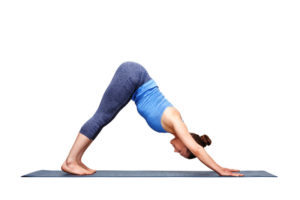
    downdogcorrectWhat is flexibility?

    The dictionary says it best: Flexibility is the ability to bend easily without breaking.


    Is Mobility the same thing?

    Perhaps you’ve heard the term mobility at the gym or on social media lately.  This is not the same as flexibility.  Mobility refers to ability to move safely and effectively through exercises, and more importantly, through the movements of daily life with full range of motion while maintaining proper alignment and without compensations.  Mobility requires flexibility and stability (i.e. strength).  Mobility training includes stretching, self-myofascial release, and corrective exercises (usually with bands).

    Stretching works in the short-term by increasing range of motion and in the long-term by increasing our tolerance to stretching.  Even though a muscle becomes less resistant to stretching, it can still be ‘stiff.’ This is where self-myofascial release can help.

    Self-myofascial release (SMR) a.k.a foam rolling releases muscle tension and improves circulation.  More important, SMR acts on receptors in the fascia that affect the autonomic (involuntary) nervous system.  The autonomic nervous system has two halves: sympathetic (fight or flight) and parasympathetic (rest and restore).  Most of us get stuck in fight or flight way too much. The negative health consequences of chronic stress are a whole other post. It suffices to say that we all need more ‘rest and restore’ in our lives. SMR strengthens the parasympathetic nervous system by lowering heart rate, blood pressure, and respiratory rate.  This decreases overall muscles tone, as your muscles are no longer preparing to spring into action, to fight or to flee.  This response helps to decrease the effects of physical and emotional stress.

    How does Yoga fit it?

    Since Yoga also strengthens the parasympathetic nervous system, increases range of motion, and improves stability, I’m including it here with flexibility and mobility.

    How much do you need?

    The America College of Sports Medicine recommends flexibility exercises at least 2 or 3 days per week. The National Academy of Sorts Medicine suggests that flexibility can be trained daily. Static stretches must be held for 20-30 seconds (60 seconds if you’re 65 or older) to improve range of motion. And this can be repeated up to 4 times. According to NASM, SMR can also be practiced daily*.

    Trainer’s Tip: Use a foam roller, LAX ball, Tiger Tail, or Thera Cane after strength training (2-4 days per week) and anytime you have muscles soreness: before bed while watching television, after waking up as part of your morning routine, keep a LAX ball under your desk to roll out your feet. After cardio, while the body is warm and pliable, is a great time for deep static stretching.  Static stretching should not be done pre-workout because it decreases strength, power, and performance for up to one hour.

    Studies have shown that two Yoga classes per week help with depression.  In Swami Muktibodhananda’s commentary on The Hatha Yoga Pradipika, she suggests a daily 30-minute practice. And as little as 15 minutes of mindfulness each day has been shown to reduced inflammation and chronic stress.

    Trainer’s Tip: If you are not practicing yoga, start right now.  There are many different styles.  Find the one that is right for you.

    A final word on mobility: Most people have movement restrictions in their shoulders, hips, and ankles.  These causes issues locally and also in wrists, low back, knees, and more. Work with a qualified personal trainer or physical therapist to correct these issues.

    Up next, strength!

    Alicia Cross is a Certified Personal Trainer, Wellness Coach, and Yoga Instructor with more than 15 years’ experience working with clients in classes and one-on-one.  She is a yogi, meditator, vegan, and lifter of heavy things. If you’re ready to discover the strength and peace that comes from within, email Alicia@AliciaCrossTraining.com.

    Related Posts:

    Video: Wrist Stretches, Exercises, & SMR

    Posture Part 2: Stretches

    Posture Part 3: SMR VIDEOS

    *SMR should be cautioned or avoided for people with the following: congestive heart failure, kidney failure, liver or pancreas issues, bleeding disorders, skin conditions, cancer, osteoporosis, acute rheumatoid arthritis, blood clots, aneurysm, anticoagulant therapy, bursitis, open wounds, fractures, edema, advanced diabetes, infections. If these or other conditions are present or if you have any questions, consult your physician.


  • What is Fitness? Part 1: Cardio

    Cardiorespiratory fitness is measured by VO2 max and refers to the ability of heart and lunges to deliver oxygen to the body. Cardiorespiratory efficiency is improved with activities that use large muscle groups and increase the heart rate: a brisk walk, Zumba, swimming, cycling, running, jumping rope, rowing, and even intense circuits of body weight or weighted exercises.

    Cardiorespiratory training improves VO2 max by strengthening the heart and lungs; elevates your mood and alleviates anxiety; reduces the risk of high blood pressure, diabetes, and other chronic conditions; helps control blood sugar; boosts your energy; helps to maintain a healthy body weight; and improves memory and focus.

    Notice I said cardio helps to maintain a healthy weight?  Contrary to what you’ve seen on social media and late-night infomercials, cardio will not make you lose weight.  Only improving your nutrition can do that.  Cardio helps with your weight loss goals by improving functions in your brain associated with impulse control (put down the cookie!), planning (#mealprep), and working toward a goal (remember your why).

    How much cardio do you need?

    For Cardiorespiratory training, The American College of Sports Medicine recommends at least 150 minutes of exercise each week (30-60 minutes of moderate-intensity exercise over 5 days or 20-60 minutes of vigorous-intensity exercise over 3 days).

    How to meet those guidelines:

    smartwatchcanstockphotoSteady State cardio at least once per week. This is low to moderate endurance training. You’ll be in Zone 1 for 20-60 minutes, depending on your fitness level and goals.  Do any activity that allows you to keep a consistent heart rate for the duration of the workout.

    Trainer’s tip: steady state cardio is perfect the day after a really tough workout. It can help alleviate soreness and speed recovery.

    spinningbike

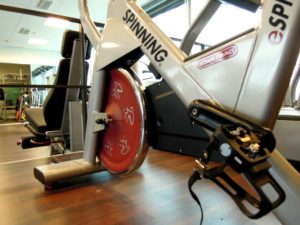
    Intervals no more than twice per week. Get your heart rate into Zone 2 or 3 with high intensity bouts of work (i.e. sprint) followed immediately by low intensity rest. If you’ve never tried intervals, start with 30 seconds of work followed by 2 minutes of rest. As intensity goes up, duration goes down: your interval workouts might be 10-45 minutes.

    Trainer’s tip: I use the free app, Seconds Pro. I program the timer, the commands, and the number of rounds and it plays over my music. HIIT (High Intensity Interval Training) will leave you burning even more calories when the workout is over because of the increased E.P.O.C. (excess post-exercise oxygen consumption).

    medicineball

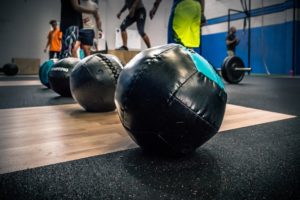
    MetCons no more than twice per week. A MetCon (Metabolic Conditioning) is a challenging circuit with little or no rest. These are completed for reps or time and can include bodyweight exercise (burpees, pushups, and sit ups) and also equipment (battle ropes, medicine balls, and jump ropes). These are meant to be  relentless; spend about 12-20 minutes on these.

    Trainer’s Tip: Avoid exercises and equipment you’re not completely confident with. In the middle of intense circuit is no time to learn how to properly swing a kettlebell. Keep track of your results so you can repeat and compare. Seeing a few more reps or a little faster finish time is a great motivator.

    Whether you’re on steady state, intervals or a metcon, you’ll need to warm up and cool down. The more intense the workout, the more time you’ll spend on these. And don’t forget to stretch after! I’ll cover Flexibility/Mobility next.

    Alicia Cross is a Certified Personal Trainer, Wellness Coach, and Yoga Instructor with more than 15 years’ experience working with clients in classes and one-on-one.  She is a yogi, meditator, vegan, and lifter of heavy things. If you’re ready to discover the strength and peace that comes from within, email Alicia@AliciaCrossTraining.com.

    Related Posts:

    What Do You Do for Cardio?

    What Should I do First? Strength or Cardio?


  • What is Fitness?

    Being fit means being prepared and ready to meet the demands of a task. What is your task? Why are you exercising? If you’re like most people at the gym or in the yoga studio, you’re not a professional athlete and you’re not training for a competition.  You’re there because you’ve figured out that exercise and yoga helps you meet the demands of life.  For you, being fit means feeling energized throughout the day, feeling confident, looking great, having less aches and pains, feeling less stressed, and setting yourself up to be healthy now and for years to come.

    You are training for life.

    runners-635906_1280

    Now that you know why, the next question is how. How can you best train for health and fitness?  It’s confusing with all the celebrity trainers, conflicting information, myths that won’t go away, and fads that come and go.


    I break it down for you into six components:

    1. Cardiorespiratory Fitness
    2. Flexibility/Mobility
    3. Strength
    4. Balance
    5. Power
    6. Speed/Agility/Quickness

    Over the next six posts, I’ll define each one, explain the benefits, cut through the hype, and give you my favorite tips.  You’ll understand why each component is important for your goals and you’ll have the tools to start adding them into your routine.  Are you ready to get out of your comfort zone, stop wasting time and energy, and reach your goals faster? Stay tuned to find out what’s missing from your routine and why you need to stop neglecting it!


    Alicia Cross is a Certified Personal Trainer, Wellness Coach, and Yoga Instructor with more than 15 years’ experience working with clients in classes and one-on-one.  She is a yogi, meditator, vegan, and lifter of heavy things. If you’re ready to discover the strength and peace that comes from within, email Alicia@AliciaCrossTraining.com.


  • What Drives You? Intrinsic Versus Extrinsic Motivation

    We are motivated by both external and internal factors. We are extrinsically motivated when we complete a task solely to earn a reward, fulfill an obligation, or avoid negative consequences. Intrinsic motivation, however, means doing something for the sake of doing it. It’s the things we enjoy, the job we’d do even if we weren’t getting paid, the tasks we complete when no one is looking.  We need no praise, no recognition, and no reward.

    girlwitharmsupExtrinsic motivators work great for tedious chores that aren’t inherently rewarding. But to really feel fulfilled, to stick with something even though it’s difficult, we need to be intrinsically motivated. This holds true at work, at home, and at the gym.  In Drive: The Surprising Truth About What Motivates Us, Dan Pink gives his tips for fitness based on his theories of motivation:

    1. Set a goal that is relevant for you. You’ll be much more successful if you’re intrinsically motivated to improve your health than if you’re extrinsically motivated to lose weight for an event. How many times have you seen people lose weight for a wedding, a reunion, or a beach vacation only to put it all back on (and more) after the big day?
    1. Find something you enjoy. This doesn’t mean it’s not hard work, but you do not need to be miserable for exercise to be effective. There are so many options in the world of fitness: weightlifting, swimming, martial arts, run clubs, Barre, boot camp, Zumba, cycle, paddle board, yoga, and even fusion class that incorporate more than one of these in a single session. Think outside the big box gyms.
    1. Find something you can master. Do something that involves learning a skill, improving your technique, and setting higher and higher goals. It’s good to have weight loss goals, but it’s much more inspiring to lift heavier and heavier weights, to learn a new skill, or to progress at a sport you love.
    1. Rewards can backfire. Bribing yourself with a treat if you reach your goal can crush your intrinsic drive. You’ll start working toward the reward rather than your original goal. And that won’t last. Nobody wants to drag themselves to the gym day after day for the promise of pizza some day in the future.

    If you aren’t reaching your health and fitness goals, reflect not only on your ‘why’ but also on your ‘how.’ Remember why you started and find something challenging and enjoyable to get you to your goal.

    Alicia Cross is a Certified Personal Trainer, Wellness Coach, and Yoga Instructor with more than 15 years’ experience working with clients in classes and one-on-one.  She is a yogi, meditator, vegan, and lifter of heavy things. If you’re ready to discover the strength and peace that comes from within, email Alicia@AliciaCrossTraining.com.

    Related Posts:

    Success Starts with a SMART Goal

    Five Cues to Trigger the Exercise Habit