Blog

  • Nutrition and Metabolism 101

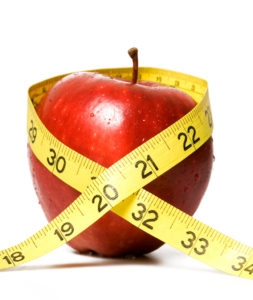
    canstockphotoapple


    With so much noise on the internet about nutrition, it’s confusing.  There’s a lot of conflicting information, misleading ads, and unrealistic promises. So what’s true? Education yourself with an understanding of the basicis so you can decide for yourself.


    What is Metabolism?

    Metabolism is the combination of anabolic (building up) and catabolic (breaking down) processes. These processes happen constantly in all of your cells.


    What is Nutrition?

    Nutrition in the process of taking in food for growth and repair (anabolic).


    What is a Diet?

    A diet is the food and drink regularly consumed or a regimen of eating and drinking sparingly as to reduce one’s weight.


    Going on a diet means restricting calories in order to create a calorie deficit (taking in less calories than your body burns in a day). The calories you burn all day can be broken down into three categories:


    • RMR (Resting Metabolic Rate) or BMR (Basal Metabolic Rate): the least amount of calories you need to stay alive. RMR accounts for about 60-70% of total calories burned in a day.


    • TEF (Thermic Effect of Food): the energy you expend eating and digesting food. TEF accounts for about 10% of total calories burned. Protein has a higher thermic effect than carbs and fat, because your body burns more calories eating, breaking down, converting, and storing protein than you do when you eat fat or carbohydrates. This one of the reasons why eating more protein is important when weight-loss is your goal.


    • TEE (Thermic Effect of Exercise): the amount of calories burned working out. TEE accounts for about 15-30% of total calories burned based on exercise type, duration, and intensity.


    To determine how many calories you burn daily, first calculate your RMR by converting your body weight in pounds to kilograms by dividing by 2.2. For women, multiply body weight in kg by .9 and for men, multiply by 1. Multiply the result by 24. That’s your RMR. Next, divided your RMR by .7 and .6 to get the range of calories you burn daily.

    Ex) For a 150lb female:
    150 ÷ 2.2 = 68kg
    68 x .9= 61 x 24= 1464 daily RMR
    1464 ÷ .7 and .6= 2091 and 2440
    A 150lb female burns approximately 2091-2440 kcal/day.


    Use an online calorie tracker, like My Fitness Pal, to see how many calories you take in daily.  If your weight holds steady (up to 5lb fluctuation is normal for women), your current diet maintains your weight. If you want to make changes to your weight, you need to make changes to your diet.


    Metabolism Misconceptions: 

    I had a client whose log wasn’t very full and the entries were foods like chicken wings and soda even though weight loss was her goal.  She told me she thought healthy food didn’t have calories and she had to log only the bad stuff.  I had another client who was surprised when I showed her her total daily calorie expenditure. She thought she burned only the 200-300 calories she burned during exercise and movement.


    What is a Calorie?

    A calorie is shorthand for kilocalorie (kcal). One Kilocalorie is the amount of heat energy needed to raise the temperature of 1 kilogram of water 1° C (1.8° F). A calorie is a measurement of energy. You take in energy with the food you eat and you burn energy 24 hours a day to stay alive and to move.  Energy not used is stored as fat. Calories are not bad, they are energy.  What you decided to do with that energy once you take it in is up to you.


    What questions do you have about nutrition and metabolism? Post them in the comments below. 


    Alicia Cross is a Certified Personal Trainer, Wellness Coach, and Yoga Instructor with more than 15 years’ experience working with clients in classes and one-on-one.  She is a yogi, meditator, vegan, and lifter of heavy things. If you’re ready to discover the strength and peace that comes from within, email Alicia@AliciaCrossTraining.com.


    Related Posts:

    Fix Your Nutrition in 10 Steps

    Practice Mindful Eating to Reach Your Goals

    You Can’t Out-Exercise a Bad Diet
     

  • Sneak Veggies into Your Smoothies with These 5 Recipes

    Get more vegetables, fiber, vitamins, and minerals without even noticing with these 5 smoothie recipes. The veggies just disappear!

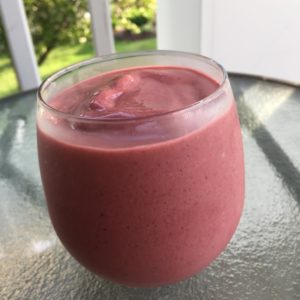
    Strawberry Beet Smoothie

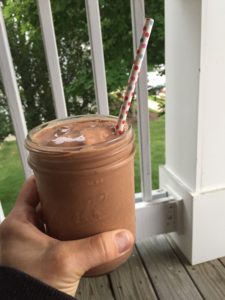
    IMG_3496

    1 cup halved fresh or frozen strawberries
    1 1/2 chopped beats
    1/2 avocado
    1 cup water
    1 scoop extra wild slot machine
    ice


    Piña Colada Smoothie with Yellow Squash 

    https://aliciacrosstraining.com/casino-deposit-5/

    1 cup chopped pineapple
    1 cup chopped fresh yellow squash
    1/4 cup coconut milk from a can
    1 1/2 cup water
    1 Scoop extra wild slot machineice


    Peach Pumpkin Smoothie

    PeachPumpkinSmoothie1 fresh peach (or equivalent frozen peach slices)
    1/3 cup pumpkin puree
    1/2 avocado
    1 cup water
    1 Scoop extra wild slot machine
    ice


    Chocolate Peanut Butter Banana Smoothie with Cauliflower

    ChocolatePBbananasmoothie1 banana
    1 cup chopped fresh or frozen cauliflower
    2 T Peanut butter
    1 cup water
    1 Scoop extra wild slot machine
    2 T Cacao Powder
    ice


    Mint Melon Spinach Smoothie

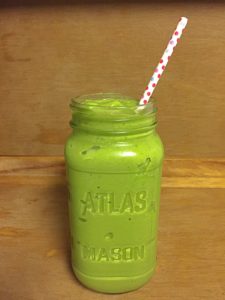
    MintMelon1 cup cubed honeydew
    1 handful baby spinach
    1/2 avocado
    1 cup water
    1 Scoop extra wild slot machine
    ice
    2 drops DoTerra Peppermint oil or fresh mint


    Alicia Cross is a Certified Personal Trainer, Wellness Coach, and Yoga Instructor with more than 15 years’ experience working with clients in classes and one-on-one.  She is a yogi, meditator, vegan, and lifter of heavy things. If you’re ready to discover the strength and peace that comes from within, email Alicia@AliciaCrossTraining.com.

    Related Posts:

    Fix Your Nutrition in 10 Steps

    8 Ways to Get More Plant-Based Protein


  • Tight Upper Back? Mobilize Your T-Spine

    Do you have tightness in your upper back? Does you posture need some improvement? Try these self-myofascial release techniques, exercises, and restorative yoga poses to mobilize your thoracic spine, reduce muscle tension, and improve your posture:

    Self-Myofascial Release with
    Foam Roller 
    and Yoga Tune-Up Therapy Balls 


    Exercises

    Back Extension on a Stability Ball

    Quadruped Twist with hips on heels

    Tall Kneeling Twist with Lateral Flexion


    Restorative Yoga Poses with a Bolster and Blanket

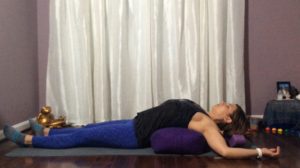
    chestexpansionwithbolster

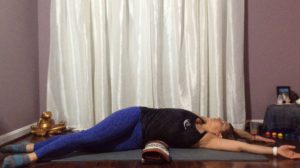
    Chest Expansion: Place a bolster under your upper back perpendicular to your spine. Rest your arms in goal-post above bolster. Support your head with a block or rolled blanket.  Great for slumped shoulders. Stay here 1-5 minutes.


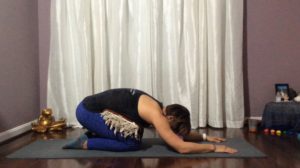
    childsposewithblanket

    Child’s Pose with a Blanket: With knees hip distant, place a blanket over your lap and a block under your forehead. This pose will encourage rounding through your upper back. Stay here 1-5 minutes.


    SupportedSidelyingSupported Side Lying Stretch into a Twist: Place a rolled blanket under your waistline (between ribs and hips). From side lying, reach top foot slightly forward and top arm back into a gentle twist.


    Alicia Cross is a Certified Personal Trainer, Wellness Coach, and Yoga Instructor with more than 15 years’ experience working with clients in classes and one-on-one.  She is a yogi, meditator, vegan, and lifter of heavy things. If you’re ready to discover the strength and peace that comes from within, email Alicia@AliciaCrossTraining.com.

    Related Posts:

    6 Yoga Poses For Your Back

    Posture Part 1: Exercises

    Posture Part 2: Stretches

    Posture Part 3: SMR

  • So You Wanna Do a REAL Push-Up?

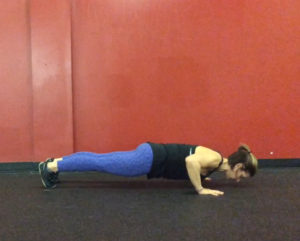
    fullsizeoutput_5d4A real push up (a body weight push-up on the floor on your toes) – that is a great goal to have! This functional exercise works your entire body: Your arms and shoulders are helping while your legs, core, and back muscles are stabilizing. More muscles worked means more calories burned! If you can’t do a push-up right now, modify as much as you need to in order to maintain good technique. This will keep you safe and on
    target to reach your goal.


    Technique:

    DO keep the core braced rather than arching your low back. Do keep the head on straight rather than letting it fall down or straining to look forward. DO keep the legs engaged rather than letting them buckle. DO angle the elbows slightly back rather than winging them forward. DO keep the upper back stable rather than collapsing.

    Video yourself to check your technique and to have a ‘before’ video for comparison.


    How to modify:

    You’re probably familiar with the kneeling modification. Use this variation when in a circuit class and the object is to keep moving.  When working on building strength and progressing toward a full push-up, kneeling push-ups are not the best option. Instead, keep the legs straight and raise the upper body as high as you need to in order to maintain good technique through all the repetitions. If you have access to a rack, adjust the barbell and use that for your hands. This option also allows you to note exactly where you’re at and to progress gradually.  As you get stronger, you’ll lower the bar closer and closer to the floor. If you don’t have access to a rack, begin on any even, sturdy surface, such as a machine at the gym or your kitchen counter at home.


    The Program:

    On 2-3 non-consecutive days each week, perform 3-4 sets of 10-15 repetitions. Rest when form deteriorates. When it’s no longer challenging, lower the bar or find a lower surface at the gym or around the house. Since it is a full body exercise, remember to also train your back (with the exercises in this post) and your core (with the exercise is this post).


    Alicia Cross is a Certified Personal Trainer, Wellness Coach, and Yoga Instructor with more than 15 years’ experience working with clients in classes and one-on-one.  She is a yogi, meditator, vegan, and lifter of heavy things. If you’re ready to discover the strength and peace that comes from within, email Alicia@AliciaCrossTraining.com


    Related Posts:

    4 Things You Can Do About Those Indents in Your Shoulders from Your Bra

    Why Don’t We Bench Press

    Create Your Home Gym for Less Than $500

  • 4 Things You Can Do About Those Indents in Your Shoulders from Your Bra

    womenholdingbraQ: Is there anything I can do about the indents in my shoulders from bra straps?


    A: Here are four things you can do right now about those indents:


    1. Go Shopping: Toss your old bras that have lost their elasticity and support. Get properly fitted for a bra. Check out this video to see how a bra should fit so the straps aren’t digging into your shoulders. Choose a bra with wider straps to reduce the pressure and alternate with racerback bras more often.


    1. Lose Excess Weight: If you are overweight, losing weight will help. Remember weight loss happens in the kitchen. Fix your nutrition with these 10 steps.


    1. Get a Massage: This will improve circulation, reduce muscle tension, and encourage heeling. Schedule with a massage therapist or massage this area yourself.


    1. Improve You Posture: Last but not least, strengthen your back and improve your posture with these three exercises:


    Seated Row

    High to Low Row

    Rear Delts

    Perform three sets of 12-15 repetitions on two or three non-consecutive days each week, resting about 90 seconds to two minutes between sets.  The last couple repetitions should be tough.

    Ill-fitting bras, being overweight, and poor posture can cause more than just unattractive shoulder indents: It can also cause a condition called Costoclavicular Syndrome in which pinched nerves lead to pain, numbness, and fatigue in the in the arms and hands. This can be caused by your bra straps and from repeatedly carrying a heavy bag or backpack. If you have any of these symptoms, consult a doctor, physical therapist, or chiropractor.

    Alicia Cross is a Certified Personal Trainer, Wellness Coach, and Yoga Instructor with more than 15 years’ experience working with clients in classes and one-on-one.  She is a yogi, meditator, vegan, and lifter of heavy things. If you’re ready to discover the strength and peace that comes from within, email Alicia@AliciaCrossTraining.com.

    Related Posts:

    Posture Part 1: Exercise Videos

    Posture Part 2: Stretches

    Posture Part 3: SMR Videos

  • My 3 Rules for Helping People

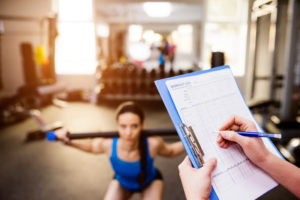
    clientclipboardAfter almost 18 years working with people in the fitness and wellness fields, I’ve come up with my 3 ground rules for helping clients while taking care of my own wellbeing.


    1. Walk the Walk: I pride myself on this one. I have never and will never ask a client to do anything I don’t do myself. I set goals, I figure out what’s holding me back, I make a plan, I hire people to help me. I also fail, get discouraged, and start again. My life is a journey to become healthy and whole in all areas of my life. I hope to help people along the way in some of the areas I’ve figured out. I never give advice on a subject I know nothing about or I’m still working on myself. I stay in my lane.


    1. Ask Questions and Listen: When I went from group fitness instructor to fulltime personal trainer, I assumed I would tell clients what they had to do to reach their goals, they would follow my advice on exercise, nutrition, and overall wellbeing (after all they were paying me for this), and I would have a wall of successful before and after photos. But that’s not what happened. Week after week clients came back reporting that they hadn’t done their workouts or implemented anything we talked about the previous session. Why? I realized there was a lot more going on than just teaching people how to deadlift and count calories. Giving them more information wasn’t helping them. Instead of reading about the latest fitness trends, I studied motivation, psychology, coaching techniques, and different personality types (my favorites to use are the Four Tendencies and the Doshas). Rather than telling clients what to do, I learned to ask the right questions and listen. I help clients figure out what’s holding them back, what strategies will move them forward, and what steps they are willing to make. A good program the client follows is better than the perfect program they quit or never start.


    1. Let go: Full disclosure, I’m still working on this. I put my heart into every client and student. That’s why it’s so disappointing when new clients give up after only a month or two or students disappear after a couple classes. I know this work takes a lifetime and I know they will be successful if they commit to it. But I can’t want it for them. It’s hard not to take it personally when clients aren’t reaching their goals. I wonder what I could have done better. But then I remind myself that I see them 1-2 hours out of 168 hours each week. I have done all I can and I’m not responsible for what they are (or aren’t) doing the other 99.9% of the time. And, on the other hand, when clients share their victories: losing weight, PR’ing their squat, reducing medications, eliminating pain, having the confidence, inner strength, and patience to accomplish a big life goal, I feel victorious myself. But I remind myself that if I were the secret ingredient to their success, then all of my clients would be success stories. Every client is on their own journey and I’m working to help them the best I can, but ultimately, it’s on them. They have to do the work.

    Are you a helping professional or caretaker? What are your ground rules? How do you take care of yourself so you can better care for others?

    Alicia Cross is a Certified Personal Trainer, Wellness Coach, and Yoga Instructor with more than 17 years’ experience working with clients in classes and one-on-one.  She is a yogi, meditator, vegan, and lifter of heavy things. If you’re ready to discover the strength and peace that comes from within, email Alicia@AliciaCrossTraining.com.


    Related Posts:

    Why I Meditate

    My Story

  • Are You Training for Health, Fitness, or Performance?

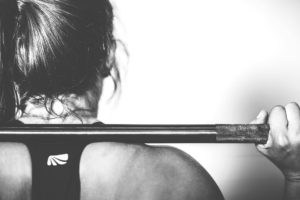
    femalebarbellI can’t say it enough: You need a goal. The more specific your goal, the more likely you are to be successful. Read more about setting a S.M.A.R.T. goal here. Your goal will be either health, fitness, or performance based.


    Training for Performance:

    You have performance-based goals if you are training for a sport or an event, like a marathon, an obstacle course race, or weightlifting meet. You are an athlete and you probably have a coach (in-person or on-line). Your training, nutrition, and recovery support your performance goals. You make sacrifices for the sake of your training and the sport you love.

    If you are like most of the population, you are not a competitive athlete. You are training for health and fitness. You are the reason I do what I do: I’m here to help you getting healthier and fitter. The good news is, you don’t need to train for a marathon or miss out on life to be healthy.


    Training for Health:

    For adults, The American College of Sports Medicine (ASCM) recommends:

    • Strength training 2-3 days each week with 2-4 sets of 8-12 repetitions per exercise (10-15 repetitions for middle-aged adults).
    • Cardiorespiratory training at least 150 minutes each week (30-60 minutes of moderate-intensity exercise over 5 days or 20-60 minutes of vigorous-intensity exercise over 3 days).
    • Flexibility exercises at least 2 or 3 days per week.
    • Neuromotor exercises or functional fitness 2-3 days per week, 20-30. Exercises should involve motor skills (balance, agility, coordination and gait), proprioceptive exercise training and multifaceted activities (tai chi and yoga) to improve physical function and prevent falls in older adults.

    You can be healthy with 2-3 days of basic strength training, a brisk 30-minute walk serval times each week or a few Zumba or Cycle classes, and 2-3 yoga classes each week.

    Do you like more of a challenge? Want to see some muscle definition? Enjoy picking up heavy weights? Motivated by a bit friendly competition with your workout buddies? Being healthy is important to you, and you are also training to be fit.


    Training for Fitness:

    You enjoy seeing your squat numbers go up, but you’re not willing to miss your kid’s recital for leg day. You want to look good, but not if it means never eating pizza again. You stick to your training routine and make progress, but you don’t feel guilty taking a rest day or a vacation. Your training, nutrition, and recovery support not only your training at the gym, but more importantly, your real life beyond the gym walls.

    What are you training for? What’s important to you? Answer these questions to reach your goals faster!

    Alicia Cross is a Certified Personal Trainer, Wellness Coach, and Yoga Instructor with more than 15 years’ experience working with clients in classes and one-on-one.  She is a yogi, meditator, vegan, and lifter of heavy things. If you’re ready to discover the strength and peace that comes from within, email Alicia@AliciaCrossTraining.com

    Related Posts:

    What is Fitness?

    Goals or Resolutions?

    The 5 Biggest Mistakes You’re Making at the Gym

  • 10 Reasons Why I LOVE Bands

    Strength is defined as the ability of the neuromuscular system to produce internal tension to overcome an external force OR the amount of force a muscle can exert against an external load. That external load can come from gravity (think good posture and planks), weights, or bands. Bands are big part of my own training and clients’ programing.  I use:

    Here are 10 reasons why I love bands:
    camelwithband

    1. Bands are great for exercise and stretching (like a yoga strap or assisted stretches).

    2. Bands are light weight and easy to carry in your gym bag or in luggage on travel.

    3. Bands are inexpensive. You’ll spend hundreds of dollars amassing a complete set of weights.

    4. Bands provide progressive resistance. You can make exercises more challenging by taking up the slack, doubling up the band, or using a thicker band.

    5. Studies have shown bands are just as effective as free weights at increasing strength and reducing body fat.

    6. Exercises with the band anchored externally require more core stability compared to weighted exercises and machines.

    7. Bands require more eccentric work (resisting the band snapping back) which joints love. Connective tissue needs more attention as we age. Starting around age 40, overuse injuries like tendonitis occur because the tendons do not adapt or heal as quickly as they did in our 20’s. Older adults need to keep this in mind when starting something new.

    8. Bands don’t rely on gravity as free weights do. For example, to perform a chest press with dumbbells, you have to lie down. Performing a standing chest press with weights, is not the most effective way to work the muscles of your chest. You can remain standing for a banded chest press if you anchor the band behind you. This standing movement is more similar to a movement you would make in real life (i.e. functional) and core stabilizers will be recruited more in standing.

    9. Unlike free weights, bands provide non-linear resistance. The more the band stretches, the more resistance it provides (more range of motion, more resistance, more muscle fibers recruited). It’s the opposite with many free weight and body weight exercise: They are easier at the top (for example, bicep curls, squats, deadlifts, pushups).

    10. You can’t use momentum and cheat with bands.

    Ready to gain the benefits from band training in your routine? Email me for programing or to sign up for the next Semi-Private Training session!

    Alicia Cross is a Certified Personal Trainer, Wellness Coach, and Yoga Instructor with more than 15 years’ experience working with clients in classes and one-on-one.  She is a yogi, meditator, vegan, and lifter of heavy things. If you’re ready to discover the strength and peace that comes from within, email Alicia@AliciaCrossTraining.com.

    Related Posts:

    Create Your Home Gym for Less Than $500

    Strengthen Your Core Without Sit-ups or Crunches!

    Full Body Static Stretch Video

    The 5 Biggest Mistakes You’re Making at the Gym

  • Fit at Any Age: 60’s and Beyond

    fitatanyagephotoThe most important thing to know is that it is never too late to begin a fitness routine. If you haven’t been exercising and taking care of yourself, start now.  Be sure to talk to your doctor first and start slow.


    Exercise is the fountain of youth.

    Researchers have found that people who maintain their leg strength have less age-related cognitive decline and have better mortality rates. Adults over 65 can delay the loss of independence by as much as 10-12 years with progressive aerobic training (i.e. cardio). And people with a slower gait speed are more likely to die than their faster walking counterparts.


    For some, a fall can be a death sentence.

    20% of older adults who break a hip (95% of which happen as a result of a fall) die within 1 year. 1 in 3 women and 1 in 12 men will experience a hip fracture. Falls cause more than 32,000 deaths each year in the US (more than 4 times the number caused by drowning and fires combined). 41% of falls are caused by incorrect weight shifting, excessive sway during standing, or missteps during walking, not due to slips and trips.  Exercise has been shown to reduce the incidence of falls by up to 40%.


    What kills the body also kills the brain.

    2/3 of people over 65 are overweight. Obesity doubles the risk of dementia and increases the risk of depression and diabetes. Diabetes triples the risk of heart disease, which increases the risk of Alzheimer’s. Only 40% of Alzheimer’s patients have the gene for it. The majority of people with this disease are not genetically predisposed for it. This means environment and lifestyle are bigger predictors than genes. Heart disease kills 600,000 people per year (that’s 1 in 4 deaths). Risk factors for heart disease are: high blood pressure, high cholesterol, smoking, diabetes, overweight and obesity, poor diet, physical inactivity, excessive alcohol use. These are all preventable and manageable with exercise, diet, and lifestyle.


    Exercise to the rescue.

    Active adults over 65 are 50% less likely to suffer from dementia. Exercise slows amyloid plaque build-up and prevents inflammation, both associated with Alzheimer’s. Exercising a little as twice per week reduces risk of dementia by 50%. And exercise effectively treats Parkinson’s by increasing dopamine.


    For you in your 60’s and beyond, exercise and a healthy lifestyle are vitally important. It’s never been an option, but now the stakes are really high. We’re talking life or death, independence or assisted living, staying involved or missing out. Maintaining your fitness, your strength, and your cardiorespiratory endurance, will help you to live a long, happy, fulfilling, independent life.


    Alicia Cross is a Certified Personal Trainer, Wellness Coach, and Yoga Instructor with more than 15 years’ experience working with clients in classes and one-on-one.  She is a yogi, meditator, vegan, and lifter of heavy things. If you’re ready to discover the strength and peace that comes from within, email Alicia@AliciaCrossTraining.com.


  • Fit At Any Age: 40’s and 50’s

    In middle age, the body and the brain are aging.

    middleagedyogaBy age 40, sedentary women have lost 10lb of lean muscles and gained at least that much in fat.  Overweight adults in their 40’s have a greater risk of death from all causes, especially heart disease, the leading cause of death in the U.S. for men and women. Studies show that mid-life adults who are the least fit are the the mostly likely to develop any of eight serious conditions later in life, including diabetes, heart disease, colon cancer, and Alzheimer’s. The odds of experiencing depression increase in this decade of life. Tendon issues are most common in males 40 to 50 years of age. Starting at age 40, we lose 5% brain volume each decade.

    The good news is exercise is the fountain of youth.  Strength training maintains and increases lean muscle mass. Diet and exercise are the first line of treatment for getting your cholesterol and blood pressure numbers in a healthy range, which lowers your risk of heart disease. Exercise sparks new brain cell growth, once thought impossible. Studies have shown that two yoga classes per week can help combat depression. Some of the most common joint injuries are preventable with a strength training program designed to correct muscles imbalances and yoga (or other flexibility training) maintains range of motion.

    In your 50’s, you might be experiencing pain from arthritis or you’re among the 80% of adults who have back pain. Due to hormone fluctuations after menopause, women find it even more difficult to lose excess weight and their risk of depression goes up. The average 50-year-old man is taking four prescriptions daily. If you have diabetes, your risk of experiencing dementia later in life increases. You’re not as fast or explosive as your younger counterparts at the gym because fast-twitch muscle fibers are the first to deteriorate.

    At this stage of life, staying fit is your insurance for healthy future. Strengthening exercises and yoga stretches can provide relief from arthritis pain. Studies have found that yoga is more effective than medication at relieving back pain. For women, exercise and yoga help regulate hormones, mood, and body weight. Weight bearing exercises, strength training, some impact, and even swimming strengthen bones and help prevent osteoporosis. Exercise reduces the risk of breast cancer, colon cancer, and fatal prostate cancer. Exercise is an effective treatment for many chronic conditions, such as diabetes, hypertension, high blood sugar, high triglycerides, and high cholesterol. In fact, statin drugs (for high cholesterol) have been shown to reduce the risk of heart attack by 10-20% and exercise (improving aerobic function) by 50%. For men with low testosterone, exercises like squats and deadlifts that use multiple muscles, increase testosterone without the risks of hormone replacement therapy. In this decade, exercise keeps you feeling youthful and energetic as it strengthens your muscles, bones, heart, and lungs.

    Up next, what exercise can do for you in your 60’s and beyond.

    Alicia Cross is a Certified Personal Trainer, Wellness Coach, and Yoga Instructor with more than 15 years’ experience working with clients in classes and one-on-one.  She is a yogi, meditator, vegan, and lifter of heavy things. If you’re ready to discover the strength and peace that comes from within, email Alicia@AliciaCrossTraining.com.

    Related Posts:

    6 Yoga Poses For Your Back

    What is Cholesterol