Blog

  • What Happens in a Private Yoga Session?

    A private yoga session with me is NOT a 30- or 60-minute flow. The purpose of a private yoga session is NOT to teach you how to do the poses “right.”

    The asanas (poses) are only a small portion of your yoga practice. The purpose of a private yoga session is to deepen your practice and to go beyond the physical poses.

    To do that, we’ll do a lot of talking, I’ll be coaching you and helping you understand yogic philosophy and Ayurveda. During a private session, we’ll discuss your goals and what’s bothering you. I’ll pull from my tool box all the things that will best help you: Ayurveda, pranayama, meditation, essential oils, etc. I’ll make recommendations based on your Dosha and the season for your practice as well as your daily routine off the mat. We’ll talk about incorporating the Yamas and Niyamas (the ethical practices of yoga) into your life off the mat. We’ll look at the koshas (or layers or being) so that you are taking care of not only your physical body but also your pranic/subtle body.

    The real work begins after our session as you being incorporating what you learned into your life and your existing yoga asana practice.

    If you’re ready to deepen your practice, email me to schedule your private yoga session with me.


  • Why Women Need to Strength Train

    Ladies, whether you want to look good, lose weight, strengthen your bones, be in a better mood, avoid a fatal fall, eliminate joint and back pain, feel younger and more energetic, or have more self-confidence, YOU NEED TO STRENGTH TRAIN.

    Strength is your ability to overcome an external force.

    If that isn’t a life skill, I don’t know what is!

    You build strength in the gym by overcoming an external force. That external force can come from gravity and body weight (think push-ups or TRX Rows), resistance bands, or weights.

    The ACSM recommends strength training 2-3 days/week.


  • 4 Tips to Make the Habit of Exercise Stick


    Do you struggle with consistency? Here are my 4 tips to make the exercise habit stick:


    1. Set yourself up for success with commitment tools and anything else you need to eliminate obstacles. Get the accountability you need by hiring a trainer and pre-paying for sessions. Hire a babysitter for the kids. Do whatever else you need to do so that nothing is getting in your way.


    1. Start small (frequency and intensity). If you’re new to working out don’t expect to do 5 bootcamp workouts every week. Start with 2 or 3 days per week and include things like walking and yoga. If you start like a firework, you’ll fizzle out fast.


    1. Be in it for the long game. Understand what the benefits of exercise are and what they aren’t. Exercise is great for managing anxiety, improving confidence, improving sleep, reducing pain, correcting posture, building bone density, preventing cognitive decline and diseases. Exercise is NOT the best thing for weight loss. Instead of looking at the scale after workouts, keep in mind the benefits you’re going have 10, 20, 30, 40 years from now. If you don’t look for quick results, you won’t be disappointed when you don’t see them.


    1. Find something you enjoy. If you are dragging yourself to cycle class and you hate it, It’s doing nothing for you. Try different types of exercise, different classes, different instructors, and different trainers. Change your mindset: Exercise is not punishment. You are not working off the calories you ate. And you are not exercising to earn your next meal.
  • Don’t Run a New Play in the Big Game

    footballAthletes don’t wait until they’re in the game of their life to try a new play. When the pressure is on, they know the plays because they’ve run the drills hundreds or thousands of times already. Do you know when they run those drills? During practice. When it’s safe. When the opponent is not out to get them. So when the time comes, they’re down and the clock is ticking, with all eyes on them, athletes don’t panic. They fall back on their training. They do what works. They automatically do what they’ve practiced.


    What’s your ‘big game’? Is it a busy season in your life or at work? An important event you need to prepare for? Or negativity and anxiety that comes up for you? Whatever it is for you, don’t wait until you’re in the thick of it to try something new to get yourself out of it. Instead use your tools as preventative measures. Just like the athletes who take to the practice fields day after day, you need to hit the gym, unroll your yoga mat, sit on your meditation cushion, open up your journal, and nourish your body with healthy foods every day. Because you are in training for this life.


    When the moment comes, and you need it most, you will fall back on your training. You’ll take a deep breath, remember that you are strong, you have a purpose, and that we are all in this together.


    How can you train like an athlete and practice when it’s easy so you’re prepared when it gets tough? And like all great athletes, you need a coach. How can I give you the support and the accountability you need to reach your goals? https://aliciacrosstraining.com/casino-slots-app/ to get started!

  • casino bonus codes 2026

    The things you think are behind the scenes will eventually make their way center stage in your life. Take something like how much sleep you get at night. Nothing is more behind that scenes than that, right? Well, I know if I’m not sticking to my bedtime routine and getting enough sleep it shows! It shows in my puffy eyes, my low mood, and my foggy brain. And that means I’m not showing up for you in the best way.

    spotlight2

    Think of all the behind the scene moments in your life and how they become front and center, especially when you’re neglecting them. They affect every area of your life: your health, work, and relationships.


    Your goals might be some version of “look good/feel good.” You’ve got to do the inner work to get the outer results. So even when nobody’s watching, do you get enough sleep, take care of your health, eat and drink healthfully, move your body daily, exercise, and de-stress with yoga and meditation? Do you have a positive, growth mindset? Are you working on your inner critic (we’ve all got one!)?


    Change starts from the inside.


    What behind the scenes work can you do so your best-self can stand in the spotlight? How can I give you the support and the accountability you need to reach your goals? https://aliciacrosstraining.com/casino-slots-app/ to get started on Wellness Coaching!


  • Change the Habit Loop to Make Good Habits

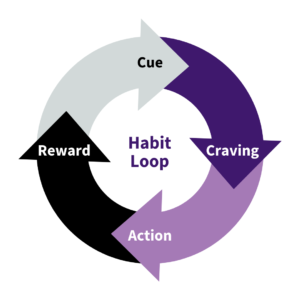
    HabitLoopHabits are actions your brain has automated because it doesn’t want to work hard for the reward you get from that action. Your brain doesn’t know the difference between good and bad habits. There are only actions and rewards. In Atomic Habits, James Clear calls it the habit loop: Cue > Craving > Action > Reward. There are 5 cues that trigger a habit: people, preceding event, location, time, and emotion.


    Some examples:

    • When I know I’m going to see my trainer (people), I’m motivated to eat healthy that day (craving). I have a salad for lunch (action) and I feel really proud when I tell her about it (reward).
    • When I get up in the morning (preceding event), all I want is coffee (craving). I stumble to the kitchen to make it (action) and I really savor that first cup of fresh, hot coffee (reward).
    • When I’m at home (location), I like to see a clean, organized space (craving). I straighten up and wash dishes (action), and I feel really calm and happy when I look around (reward).
    • I eat breakfast at 8am (time). Even if I’m on a different schedule (like over the weekend or on vacation), I start getting hungry around that time (craving). I eat something (action), and then I feel full (reward).
    • When I’m feeling anxious (emotion), I raid my kitchen for sweets (craving), eat all the junk food I can find (action), and feel better… for the moment (reward).


    Rather than trying to break a bad habit, create a new habit to replace it. Use the habit loop and change one of the steps.


    You can change the cue.

    • People: Surround yourself with positive, supportive people either in-person or follow them online. Get some accountability from someone who won’t let you off the hook. As Gretchen Rubin says, accountability comes from pros not peers.
    • Preceding Event: Do you know that if you come home from work and turn on the TV, you’ll never make to the gym? Then go directly to the gym from work.
    • Environment: Having trouble starting your in-home yoga routine even though your mat is right there in the living room? Either take a class or create a dedicated space in your home that is used ONLY for yoga.
    • Emotion: If you eat or react out of emotion and you want to change that, be on offense rather than defense. Don’t wait until you’re feeling anxious or stressed and then try to deal with the situation. Get ahead of it with a daily meditation habit. This allows you to recognize your emotions and create some space so that you are able to respond rather than react with something that doesn’t serve you, like emotional eating.


    You can change the action.

    • Do you crave sweets and like to snack in the evening? Do something different after dinner like going for walk or brushing your teeth.


    You can give yourself a healthy reward:

    • Relax in the sauna after a workout, watch your favorite show after your yoga practice, or scroll social media guilt-free after the meal-prepping is done.


    It’s true that, in the beginning, while you are creating a new habit, you will need to be disciplined. Just remember that sticking with it will pay off. Working out, practicing yoga, meal-prepping, and whatever else you want to do will become automatic. Let your goal and your why keep you motivated until it’s a habit.

    Read more in my post Five Cues to Trigger the Exercise Habit.

    Do you need accountability to create healthy new habits in your daily routine? Email me!

  • Got Stress? 5 Tips to Reduce It

    unhappy-389944_1920Whether you’re in a time of high-stress (busy season at work, finals at school, dealing with a health issue) or you feel like you just can’t seem to get off the never-ending hamster wheel of overwhelm, there are steps you can take to reduce stress.


    What is stress?

    Stress is two things: it’s the external stressor (work, taxes, traffic, and even your workouts) AND it’s your internal response to the stressor. In some situations, you may be able to change or remove the external stressor. But not always. Focus instead on what you can control. And the one and only thing you can control is yourself. The solution to reducing stress is to make changes within.


    Steps you can take to reduce stress:

    1. Eat healthy meals on a consistent schedule. If you are living off of unhealthy, processed foods, or skipping meals all together, that is itself stressful on your body. Instead nourish your body with foods that reduce inflammation (whole foods, healthy fats, veggies, grains, nuts, seeds, and beans) while avoiding foods that cause inflammation (processed foods, vegetable oils, dairy, white flour, sugar, and any foods to which you are allergic or sensitive). Keep meal times consistent, slow down, and sit down to eat (not at your desk).

    What else?

    Cut back on or eliminate caffeine. Drink herbal tea. Drink plain water and plenty of it: 64 oz is a good start, but not enough if you are exercising and sweating and/or have weight loss goals.


    1. Move your body and don’t overdo it. Support your mind and your body with daily exercise you enjoy. Find ways to incorporate strength training and cardiorespiratory training into your routine. Keep in mind that if you are overdoing it at the gym on top of an already over-stressed lifestyle, you can weaken your ability to cope with stress. Signs that you’re overdoing it: You’ve hit a plateau, you’re sick all the time, you have recurring injuries, you do multiple gyms sessions in one day, you’re at the gym for 2+ hours every day, or the thought of skipping a workout causes unbearable anxiety. If you are stressed, swap out some high intensity days with walking and yoga. If you are worried about weight gain, refer back to the first tip.

    What else?

    Get out of your normal routine and ask yourself what do you want to do today or what does your body need today.


    1. Prioritize self-care. This includes your workouts, yoga, meditation, relaxing, reading, watching a movie, going out to dinner or getting coffee with friends, hobbies, and anything else you enjoy. During busy, high-stress times, self-care is probably the first thing to go. You decide you’re just too busy for yoga and it’s better to skip it and put in some extra time at work. The reality is, you need that yoga class now more than ever. Put self-care time on your calendar. These appointments with yourself are just as important (or more) than your other commitments.

    What else?

    Change your mind set about self-care. Make this your new mantra: “In order for me to function at the high level I expect of myself, I have to keep my body and mind in a peak state of health.” (from Woman Code by Alisa Vitti)


    1. Lighten your load. Review your schedule and your daily chores. If something doesn’t need to be done, let it go. If it needs to be done, does it need to be done by you? Encourage your family or colleagues to take on more responsibility or hire it out. Paying someone to take over chores like cooking, cleaning, laundry, or grocery shopping, will free up so much energy and time for you.

    What else?

    Look at your energy throughout the day and plan your tasks accordingly. Figure out the best time for you to workout, tackle your to-do list, and get work done. If it’s not the optimal time for something, don’t force it.


    1. Sleep. Adult humans need 7-9 hours of sleep every night. If you wake up after only 4 or 5 hours, that could be a sign that your high-stress life is preventing you from getting the rest you need to recover. As you make these other changes to your routine, your sleep quality and quantity will improve.

    What else?

    Follow a nighttime routine to unwind.


    To reduce your stress, follow these steps. If you need help, get it; Whether it’s reaching out to a counselor or a therapist to talk it out or getting a coach to help you make these lifestyle changes.


    Alicia Cross is a Certified Personal Trainer, Wellness Coach, and Yoga Instructor with more than 17 years’ experience working with clients in classes and one-to-one.  She is a yogi, meditator, vegan, and lifter of heavy things. If you’re ready to discover the strength and peace that comes from within, email Alicia@AliciaCrossTraining.com.


    Related Posts:

    Fix Your Nutrition in 10 Steps

    Ayurveda: The Science of Living Well

    We’re Never Mad at the Barbell


  • The First Step: Get Your Mind Right

    A journey of 1,000 miles begins with a single step.

    -Lao Tzu

    neurons-1739997_1920No doubt you’ve heard this saying before. Maybe it’s becoming a bit of a cliché. But I challenge you to rethink the idea of the first step. The first step happens even before you sign up for the race, walk into the gym for your first workout, or order a salad for lunch. The very first step, before you take any action toward your goal, happens in your mind.


    I’ve come to realize that mindset is the most important part of the process. If you are constantly telling yourself why you’ll never succeed, or why you don’t deserve to succeed, it doesn’t matter what actions you take, you will always be at square one.

    If you are feeling stuck, listen to the things you say about yourself to yourself and to others: I can’t change now because, I’ve always been this way, I’m too old, I don’t have time, I can’t afford it,or my favorite, my parents were just like this, it’s hereditary, there’s nothing I can do about it. If you believe these, it doesn’t matter how many workouts you log in a week or how much you cut your daily calorie intake, nothing will change.

    Your first step is to get your mind right. You must become aware of your thoughts. You need to see the monologue running all day long in your head (don’t worry, we all have it). Do this with meditation. Simply focus on your breath and just notice how often you get distracted by your thoughts. If you think that getting distracted by your wandering mind makes you a bad meditator, think again! The whole point of meditation is to see that this is what the mind does: It never stops.

    Now, you’re aware of your thoughts and you can see the ones that are holding you back. Change them with affirmations. Once you’ve identified a negative, limiting belief, you can simply affirm the opposite. If you are tired of hearing yourself say It’s too expensive, I can’t afford it, affirm I am open to the abundance that surrounds me and I welcome new opportunities for wealth and prosperity. If you keep telling yourself I’m too tired and I don’t time for that, affirm I have the capacity and the resources to achieve my goals.

    How you choose to work with affirmations is up to you: Write them on sticky notes and hang them in your bathroom or in your car so you see them daily; Repeat them to yourself silently whenever the negative thought arises; Rewrite them in your journal every day; Put a photo of them on your phone’s home screen so you will see them all day.

    Find what works for you, trust the process, be consistent, and don’t get discouraged if you fall off the affirmation wagon. One bad day won’t ruin all the progress you’ve made. If you need more ideas for affirmations, search online or check out Dr. Wayne Dyer’s book Excuses Begone!: How to Change Lifelong, Self-Defeating Thinking Habits.

    Alicia Cross is a Certified Personal Trainer, Wellness Coach, and Yoga Instructor with more than 17 years’ experience working with clients in classes and one-to-one.  She is a yogi, meditator, vegan, and lifter of heavy things. If you’re ready to discover the strength and peace that comes from within, email Alicia@AliciaCrossTraining.com.

    Related Posts:

    The Four Pillars of Wellness

    Goals or Resolutions? You Need Both

    There is No One Thing

  • You Are What You Digest

    firewithinYou’ve probably heard the saying you are what you eat. According to Ayurveda, it’s more accurate to say you are what you digest. It doesn’t matter what you eat if you’re not properly digesting and assimilating all of the nutrients and prana (vital energy) from your food.


    Improperly digested food creates Ama, a toxic build-up of sludge in the tissues. Environmental toxins also contribute to the build-up of Ama in the body. You will notice the effects of Ama as a white coating on the tongue, excess bodyweight, or chronic conditions such as pain, fatigue, skin issues, low mood, or brain-fog.


    You can remove Ama and look and feel better every day by strengthening your digestive fire or Agni. Agni means to ignite. It’s your inner radiance, joy, courage, and intelligence. It’s the fire of transformation in your body and in your life: With strong Agni, your body can breakdown food to nourish your tissues and you can make the positive changes you want to make to improve your life and your health.


    To strengthen Agni and remove Ama:

    • Follow a daily routine (dinacharya)
    • Tongue scrape every morning
    • Eat for your dosha
    • Eat for the season (ritucharya)
    • Drink room-temperature water rather than ice water
    • Drink ginger tea
    • Sip water with meals (too much water extinguishes the flames)
    • Maintain a consistent meal schedule
    • Favor pungent (spicy), salty, and sour tastes over bitter, sweet, and astringent tastes
    • Avoid excess cold, wet, heavy, oily, or processed food
    • Favor cook foods over raw
    • Exercise and practice Yoga
    • Practice Pranayama such as Ujjayi Pranayama, belly breathing, Nadi Shodhana (Alternate Nostril Breathing), Surya Bheda (Right Nostril Breathing)


    Ayurveda emphasizes right diet as the number one method of disease prevention and health maintenance. You can meditate, take herbs, exercise, and practice yoga, but it will all be ineffective if you fail to fix your diet.


    If you need guidance and support fixing your diet so you can improve your health and your life, email me and let’s get started!


    Alicia Cross is a Certified Personal Trainer, Wellness Coach, and Yoga Instructor with more than 17 years’ experience working with clients in classes and one-to-one.  She is a yogi, meditator, vegan, and lifter of heavy things. If you’re ready to discover the strength and peace that comes from within, email Alicia@AliciaCrossTraining.com.


    Related Posts:

    The Pose Thats Right for You

    Yoga is NOT a Workout

    Ayurveda: The Science of Living Well


  • Sleep: The Foundation of Recovery

    puppyAs an adult human, you need 7-9 hours of sleep per night. Whatever your goal (to get bigger, leaner, stronger, healthier, faster, etc), prioritizing sleep will help you accomplish it. Many of the benefits of training do not happen in the gym. They happen at night while you’re sleeping. Often sleep-deprived people rationalize their poor sleep habits by saying that they make it up on the weekends. Don’t fall into this trap! You need consistent, quality sleep.


    Why you can’t make-up sleep on the weekends:


    • Drowsy driving is dangerous. Last year, my family was in a near-fatal accident when another driver fell asleep coming home from work, crossed the highway, and hit their car head on.


    • People who are sleep deprived tend to weigh more and have a higher BMI. This increases the risk for diabetes, heart disease, dementia, and more.


    • Sleeping less than 8 hours causes affects hunger. Leptin, the hormone that signals fullness, goes down and ghrelin, the hormone that stimulates appetite, goes up. This leads to craving and eating more high-calories foods.


    • During sleep, your brain clears the plaque that causes Alzheimer’s disease.


    • Bill Clinton has said that every mistake he’s made in his life, he’s made because he was tired.


    • After a terrible night’s sleep, your mood suffers. You’re stressed-out, irritable, and short-tempered.


    Imagine the ramifications on your health, work, and relationships if you are chronically under-slept 5 days/week. Sleeping a few extra hours on the weekend cannot and will not undo the consequences of your actions.


    Good Sleep Habits:


    • Limit caffeine intake and have a cutoff time that works for you.


    • Follow a bedtime routine that includes no work or screens at least 60 minutes before bed. Change into clothing exclusively for sleeping. Practice gratitude each night by journaling or recalling 3-5 new things you’re grateful for every day.


    • No TV’s or devices in the bedroom (if you must use your phone as your alarm, put it across the room to remove the temptation to check it during the night).


    • Don’t consume (watching or reading) news or upsetting material in the evening.


    • Go to bed and wake up at the same every day.


    • Keep the bedroom dark. Use blackout curtains and don’t use a bright alarm clock.


    • Use your bed exclusively for sleep. Don’t eat, work, or remain in bed while you’re restless and can’t sleep.


    • Keep meal times consistent every day. This regulates blood sugar levels throughout the night so your brain doesn’t wake you up too early thinking that it’s time to eat again.


    • Have a regular stress-management practice that includes yoga, meditation, exercise, and journaling or reflection.


    If you’re have trouble staying asleep at night:


    • Keep a sleep diary. Make note of what you did and didn’t do from the list above, anything relevant from your day, and the quality and quantity of sleep. Look for a pattern.


    • Block disruptions by closing the bedroom door, wearing ear plugs and/or a sleep mask, use a white noise machine.


    • Get checked for sleep apnea.


    • Loss weight if you’re overweight.


    Sleep is the foundation of recovery. Without proper rest and recovery, you will burn out and your healthy and happiness will suffer. If you want to reach not only your health and fitness goals, but also your life goals, prioritize sleep. If you need help solidifying this essential habit, I can give you the support and accountability you need. Email me to get started with Wellness Coaching!


    Alicia Cross is a Certified Personal Trainer, Wellness Coach, and Yoga Instructor with more than 17 years’ experience working with clients in classes and one-to-one.  She is a yogi, meditator, vegan, and lifter of heavy things. If you’re ready to discover the strength and peace that comes from within, email Alicia@AliciaCrossTraining.com.


    Related Posts:

    A Great Day Starts the Night Before

    Ayurveda: The Science of Living Well