Blog

  • Fit At Any Age: 20’s and 30’s

    No matter what stage of life you’re in, you can benefit from adding exercise and yoga to your routine. In this 3-part series, I’ll highlight the benefits for every decade of life, from 20’s and 30’s through 60’s and beyond.

    First up, 20-somethings:

    20somethingsMaybe you never lost the freshman 15 you picked up at college. Or maybe you’re experiencing the pressures of grad school or entering the workforce. You grew up on smart phones and your posture shows it. If you were active in high school sports, what are you doing now to replace that activity?  Exercise and yoga offer you solutions for this phase of life. Exercise can give you the motivation boost you need to start eating better so you can get back to a healthy weight.  Yoga, meditation, and deep breathing can help you manage the stress of adulting. Strengthening your upper back can improve your posture and help correct text neck. Aerobic exercise improves executive function in your still developing prefrontal cortex so you can make better decisions. And hitting the gym can make you more socially outgoing. Finances are tight, so find something you enjoy that doesn’t require a big investment in equipment and training.  Start to cultivate the healthy habits now; Your 30-year old self will appreciate it.

    Speaking of 30-somethings:

    familyphotoIf you didn’t lay the foundation of healthy habits in your 20’s, you’re struggling. You’re discovering that you can’t eat, drink, and party like you used to without feeling exhausted the next day.  Maybe the pounds are beginning to creep on as your metabolism changes. Chalk this up to the 3-5% lean muscle you can look forward to losing every decade. In this phase of life, you’re balancing the demands of career, marriage, and owning a home. Women in their 30’s can start to lose bone density and are dealing with the added mental and physical stress that comes with pregnancy, childbirth, and motherhood.  Your schedule and your finances are allocated to many important things and people, but make the time and invest in your well-being. Your family and your colleagues are counting on you to be your best and to set a good example.

    Low to moderate intensity aerobic activity will help you to feel more energized all day long. As the body adapts to consistent training, your lungs will take in more oxygen, your muscles and other tissues will better absorb it, and the whole system will get better at removing waste. You may feel more tired at first, but stick with it and you will experience the energy-boosting effects. Yoga can give you a peaceful respite and build resiliency for dealing with life’s stressors off the mat. Strength training, especially compound exercises such as squats and deadlifts, build and maintain lean muscles. This keeps you looking good and burning more calories all day long.  Higher intensity aerobic activity, such as H.I.I.T. (high intensity interval training) and MetCons (short for metabolic conditioning and refers to intense circuit workouts), alleviates anxiety and can help prevent panic attacks. This happens because you become desensitized to the feeling of a racing heart or rapid breath. If these happen throughout the day in response to a stressor, you’ll be less likely to slip into a full-blown attack at the first signs of panic.  These benefits are especially important if you’re a woman on anti-anxiety medication and plan to become pregnant. No anti-anxiety medications for safe to take during pregnancy. Discuss with your doctor how exercise and yoga can help you manage stress. Exercise helps moms prepare for and recover from pregnancy and childbirth. Even walking briskly for 5 hours each week protects against gestational diabetes. Exercise is good for baby too; It sends more oxygen and nutrients to the baby and the jostling stimulates brain development. Babies born to active, healthy mothers are better able to self-soothe, sleep better, and have higher IQ’s. For all women, strength training and some impact from cardio will build and preserve bone density.

    Up next, middle-age. What yoga and exercise can do for you in your 40’s and 50’s.

    Alicia Cross is a Certified Personal Trainer, Wellness Coach, and Yoga Instructor with more than 15 years’ experience working with clients in classes and one-on-one.  She is a yogi, meditator, vegan, and lifter of heavy things. If you’re ready to discover the strength and peace that comes from within, email Alicia@AliciaCrossTraining.com.

    Related posts:

    What is Fitness? Part 3: Strength

    What is Fitness? Part 1: Cardio

    Know Your Zones: Heart Rate Training Zones
     

  • https://aliciacrosstraining.com/casino-near-irvine/

    Do you need to lose weight? Are you trying to avoid gaining weight?  Reaching and maintaining a healthy weight take more than counting calories and timing your meals.  Studies show it also takes mindful eating.  Practice these 6 mindful eating tips to get healthy and reach your goals:


    https://aliciacrosstraining.com/platinum-online-casino/

    1. Portion your food for more awareness about how much you’re eating. Before you dive into that party-sized bag of chips, read the label and measure out one serving and put it in a separate dish.  When serving yourself home-cooked meals that don’t come with labels, use smaller
      plates and bowls. Your eyes and your
      belly won’t know the difference, but your
      waistline will.

    youtube casino slot games

    1. Have a designated place to eat. Make an effort to eat more of your meals while sitting at the table rather than while standing over the stove, while driving in the car, or while working at your desk.


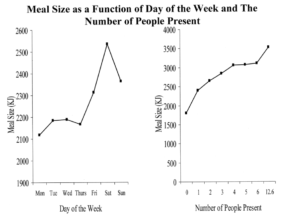
    1. When eating, eat. (Zen Proverb) Make screens (television, phone, computer) and other multitasking activities off limits during mealtime. Whenever possible, enjoy some of your meals in silence. Contrary to popular ‘diet’ advice, eating alone is actually better for you; Studies have shown that the more dinner quests you have, the more calories you will eat.

    deCastrograph

    Fig. 4. deCastro (2000)


    1. Out of sight, out of mind. Keep serving dishes in the kitchen rather than on the table during meals. If you must have a candy dish at work, put a lid on it, don’t use a clear jar, and keep it in a drawer or across the office.


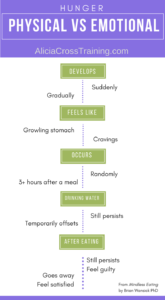
    1. hungerPause. Before eating, check in with how you are feeling. Confirm that your hunger is physical rather than emotional. Before eating, say a word of gratitude or appreciation for your meal. Use one of these or use them as inspiration to write your own.


    1. Slow down. Just as in yoga, it’s easy to go fast and rush through. It’s much more challenging to go slow. Trick yourself into slowing down at the dinner table by putting your fork down between bites, eating with your non-dominant hand, or eating with chop sticks. Chew your food the recommended 25-30 times before swallowing. Set a timer and take at least 20-30 minutes to finish your meal. And definitely wait at least that long before going back for seconds.


    Mindfully savor your next healthy meal, preferably after a great workout!


    Alicia Cross is a Certified Personal Trainer, Wellness Coach, and Yoga Instructor with more than 15 years’ experience working with clients in classes and one-on-one.  She is a yogi, meditator, vegan, and lifter of heavy things. If you’re ready to discover the strength and peace that comes from within, email Alicia@AliciaCrossTraining.com.


    Related Posts:

    Fix Your Nutrition in 10 Steps

    Why I Meditate


  • Everything in Moderation or Worst Advice Ever

    cake-1850011_1920Is everything o.k. in moderate?

    No; There’s no amount of hydrogenated oil or second-hand smoke that is considered healthy.  And for some people, even a little alcohol, gluten, or peanuts can lead to trouble.

    Is moderation a good rule to follow for nutrition habits?

    It depends; You have to know yourself to know if moderation will work for you or if it will send you on a downward spiral of binge and regret.

    Are you an abstainer or a moderator?

    In Better than Before, Gretchen Rubin outlines her 21 strategies for habit change.  One of the strategies is abstainer vs. moderator. Here’s an easy test to determine which category describes you: Are you the type of person who can keep a chocolate bar in the refrigerator and eat only a square or two each night? You are a moderator. If, on the other hand, a half-eaten candy bar would haunt you until you finished it in one night, you are an abstainer.

    Rubin, explains that moderators are satisfied by the first few bites of the treats they crave. If moderators were told to abstain from their favorite foods, they would feel too deprived. Moderation (within reason) is good nutrition advice for you if you fall into this group.

    Moderation is not good advice for anyone who can’t leave a desert, a pizza, or a bag of chips unfinished. For these people, the first few bites aren’t satisfying; they instead make the cravings stronger. And once they’ve started on their tempting treats, it’s difficult to stop. If this describes you, abstaining is the best advice for creating healthy nutrition habits.

    Moderation doesn’t work for some because those cravings are really addictions. Jill U. Adams reported in her article Cravings for Sure, But Can Sugar Cause Addictions? that when Harvard doctors “imaged the brains of 12 overweight or obese men four hours after a high-glycemic-index snack [they] found increased activity in regions of the brain that respond to drugs of abuse.” And just as with addictive drugs, we’ll do whatever we have to do to get more of the treats we crave: Another Harvard study showed that “40 percent of people who are already overweight or obese, when they’ve eaten a favorite treat every day…will work three times harder for that same treat than when they hadn’t eaten one every day for a week.”

    You may feel liberated and hit your goals faster if you decided to make certain foods off limits.  Try it and see if it works for you. Remember, there is no one-size-fits-all nutrition plan. The “diet” that worked for your friend, your spouse, or your favorite celebrity, may not work for you. The best plan is the one you’ll stick to.

    Alicia Cross is a Certified Personal Trainer, Wellness Coach, and Yoga Instructor with more than 15 years’ experience working with clients in classes and one-on-one.  She is a yogi, meditator, vegan, and lifter of heavy things. If you’re ready to discover the strength and peace that comes from within, email Alicia@AliciaCrossTraining.com.

    Related Posts:

    What Healthy Habits? Don’t Forget to Treat Yo’ Self!

    Fix Your Nutrition in 10 Steps


  • Goals or Resolutions? You Need Both

    Do you have health and fitness goals and resolutions? You need both.

    checkered-flag-309862_1280A goal is the finish line.  Once you’ve accomplished it, it gets crossed off your list.  It’s done; You lost 10lbs, hit that PR at the gym, or completed a race. Resolutions, on the other hand, are the intentions that drive you to achieve your goals: Get in shape, be healthier, have more energy. You’ll never cross these off your list, they are ongoing.

    Goals are the steps that lead you to realize your resolutions.  If you lose the 10lbs your doctor recommended (goal), you’ll look at feel better (resolution).

    As a Wellness Coach and Personal Trainer, I see many new clients coming to me with resolutions rather than goals: get fit, tone up, stay healthy, eat better. These are great resolutions to have and hiring a Coach/Trainer is a very important step (a.k.a. goal) in the process.  As a coach, I help guide clients to set SMART goals (specific, measurable, attainable, relevant, and time-bound) based on their resolutions.  I can help a client only when I know the goals they are working toward. Neither I nor the client will know if our relationship is successful if we don’t have a goal and some way to measure success.

    For example, for a client who wants to eat better, we would first assess their current eating habits. The next step is education about dietary needs and showing the client where they are falling short or going over.  I will then help the client to determine what goals they want to work on first: water, protein, fiber, etc.  From there, I offer guidance and accountability to help the client reach these specific, measurable goals that they have set for themselves.

    Another common example: a new client wants to get in shape.  Again, we’ll first assess their current level of fitness. I’ll check weight, body composition, BMI (body mass index), and resting heart rate.  I will also perform movement assessments to determine if there are any postural misalignments, compensations, muscles weakness/tightness, and joint instability. From there, I can advise the client of healthy ranges for their health markers for their age and I can suggests improvements based on what I found in the movement assessments.  It’s up the client to decide what goals are important to them.  From there, I can develop a program to help them reach their specific goals.

    Your resolutions are the guiding principles that propel you into action. It’s important to also have specific, measurable, attainable, relevant (to you), time-bound goals. Having meaningful resolutions, SMART goals, a plan to get you there, and a coach to guide you and hold you accountable, is the formula for success!

    Don’t know how to achieve your resolutions? I can help! Email me!

    Alicia Cross is a Certified Personal Trainer, Wellness Coach, and Yoga Instructor with more than 15 years’ experience working with clients in classes and one-on-one.  She is a yogi, meditator, vegan, and lifter of heavy things. If you’re ready to discover the strength and peace that comes from within, email Alicia@AliciaCrossTraining.com.

    Related Posts:

    There Is No One Thing

    Fix Your Nutrition in 10 Steps

    Falling off the Fitness Wagon?


  • Strengthen Your Core Without Sit-ups or Crunches!

    Here are five of my favorite exercises to strengthen the core without sit-ups or crunches:


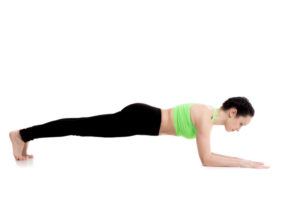
    plankcanstockphoto36337001Plank: Beginning in all fours, lower elbows to the ground and extend one leg back at a time. Keep the body parallel to the floor.  Push the ground away with the elbows, draw navel to the spine, squeeze the legs, and reach back through the heels.  Hold for 30-60 seconds.  Repeat two more times, resting one to two
    minutes in between.


    Dead Bug: Beginning on your back with arms and legs straight up to the ceiling, lower right leg toward the floor while reaching your left arm back overhead.  Slowly return to the starting position and pause before switching sides.  Focus on stabilizing through your core throughout the movements. Complete 12-20 repetitions.  Repeat two more times, resting one to two minutes between sets.

    https://youtu.be/nIBZGwSXrJI


    Pallof Press: Using bands or the pulley machine, start standing holding the band in front of your chest. Turn 90 degrees so that the anchor point or pulley is to your side. Step out until you have sufficient resistance.  Brace through your core as your press your arms straight forward.  Resist the twist! Complete 10-12 repetitions on each side.  Repeat two more times, resting one to two minutes between sets.


    Side Plank Hip Dip: Beginning in all fours. Lower the right elbow to the floor as you open up to the left.  Either lower the bottom knee to the mat and extend the top leg straight or extend both legs straight (feet stacked or top foot in front).  Using the obliques and not the shoulder, dip the bottom hip toward the floor and lift back up. Complete 10-12 repetitions on each side.  Repeat two more times resting as needed between sides.


    Half Kneeling Chop: Begin in a kneeling lunge. Hold a light to medium medicine ball or dumbbell in both hands or use a band or the pulley machine. Always rotate down toward the back knee and up toward the front foot.  The band or the cable can anchor low, as seen in the video. If you are anchoring high and pulling down, be sure to anchor on the side of the front foot. As you rotate, keep arms straight and hips square. Be careful not to lean or arch the back to complete the movement.  Complete 10-12 repetitions and switch sides.  Repeat two more times resting one to two minutes between sides.


    Alicia Cross is a Certified Personal Trainer, Wellness Coach, and Yoga Instructor with more than 15 years’ experience working with clients in classes and one-on-one.  She is a yogi, meditator, vegan, and lifter of heavy things. If you’re ready to discover the strength and peace that comes from within, email Alicia@AliciaCrossTraining.com.

    Related Posts:

    Create Your Home Gym for Less Than $500

    My Top 10 Favorite TRX Exercises

    6 Yoga Poses For Your Back

  • The Year of Energy

    electriclotusDo you have an over-arching theme for this year? I summed up my goals and resolutions in one word: ENERGY.


    This is the year of ENERGY.  For me energy means mental focus and attention, physical strength and endurance, and prana or vital life force. My resolutions are centered around cultivating, protecting, and healing my energy.


    I’m paying attention to how I feel (depleted or rejuvenated) after my daily activities, tasks, and appointments. I’ve discovered that too many depleting activities and not enough rejuvenating activities leaves me feeling burnt out.  I know that I can never let myself get so busy that I don’t make the time for rejuvenating activities that cultivate energy.  This year I resolve to:

    • Get regular massages to mediate stress and recharge.
    • Stick to my exercise routine which includes cardiorespiratory and strength training. This combination helps reduce anxiety and gives me more physical energy all day long.
    • Practice Yoga in a class. Most of the time, I find the experience of taking a class much more rejuvenating than practicing on my own.


    I’ve realized that I also need to take preventative steps to avoid feeling completely spent. It’s like my energy prehab. This year I resolve to:

    • Continue my regular meditation practice. While one session alone is not replenishing, it’s the on-going habit of meditation that keeps me from feeling overwhelmed and distracted. I’ve adopted Dan Harris’ daily-ish concept and it’s been working for me.
    • Get a physical. While I don’t like going to the doctor, I realize that there’s no better way to protect my energy than to preserve my health.


    Lastly, in Yoga, energy or vital life force is called Prana. Prana makes up the subtle body.  Just as I plan to care for my physical body, I need to care for my subtle body too.  And like physical health, which is maintained though self-care (exercise, diet, rest, etc.) and professional assistance (from massage therapists, chiropractors, physical therapists, personal trainers, and medical doctors), the subtle body is healed through self-care and with professional assistance. This year I resolve to:

    • Deepen my understanding of Energy Medicine. After my morning meditation, I practice techniques from Lauren Walker’s book Energy Medicine Yoga to wake up my energy, strengthen my aura, improve my immunity, and clear my chakras.
    • Continue to receive Reiki healing from trained practitioner. I’ve only had a couple of sessions but I believe I can no more ignore my energy than I can ignore joint pain or an achy muscle.  I need to address the matter before it gets worse.


    This year, the year of energy, I’m taking my own advice: I can’t give from an empty cup.  If I’m burnt out, distracted, tired, or sick, I’m of no use to anyone else.

    What is your one word for the year?

    Alicia Cross is a Certified Personal Trainer, Wellness Coach, and Yoga Instructor with more than 15 years’ experience working with clients in classes and one-on-one.  She is a yogi, meditator, vegan, and lifter of heavy things. If you’re ready to discover the strength and peace that comes from within, email Alicia@AliciaCrossTraining.com.

    Related Posts:

    Practice the 8 Limbs of Yoga to Address the 5 Layers of Being

    Want Healthy Habits? Don’t Forget to Treat Yo’ Self!

    Why I Meditate

  • Ten Tips for Eating Healthy While Traveling

    plane3You’re doing a great job eating healthy when you’re at home and in your normal routine.  But when you’re traveling for work, attending a weekend conference, or visiting friends and family for a few days, does your nutrition go out the window?


    Here are ten tips to help you eat healthy while on the road:


    1. Don’t log. If you’ve been logging your meals in MyFitnessPal, take a break from it. While you might be able to find chain restaurant meals on MyFitnessPal, it’s going to be tough to log a free breakfast at the conference, the hotel buffet, or a home cooked meal at the in-laws. Logging while traveling is difficult and can be one more stressor on your trip.


    1. Stay the course as much as possible. Frequent travel is even more of a reason, not an excuse, to follow your nutrition plan while you’re home. If you’re already in the habit of eating well, you’ll make healthy choices while away, you’ll bounce back quicker if you’re weight does change, and you’ll look forward to getting back to your routine when you return.


    1. Schedule a splurge meal. Are you going away for a wedding or a party when there will be food and cake? Maybe there’s a big dinner with your team or you’re planning on eating at a restaurant that the city is known for. Scheduling and anticipating your splurge will help you make healthy choices the rest of the time.


    1. Plan ahead. Check the hotel’s room service menu. See if there is mini-fridge. If there’s not a microwave in the room, you can pay extra for one. Research healthy restaurants and grocery stores within walking-distance if you don’t have transportation. If friends or family offer to pick up some staples at the grocery store, take them up on it or plan to stop on your way. If you’re driving, bring a bag of snacks and maybe a cooler too.


    1. Bring supplements. Protein powder and a greens supplement can give you the protein and fiber that the free, high-carb, hotel breakfast is missing. Grab a single serve packet for each day your away.


    1. Don’t go completely off the rails. If you don’t usually put sugar in your coffee, drink soda, or eat candy, don’t do it now because it’s free and you’re in a different zip code. If you’re accustomed to having a daily salad, choose that if it’s available over pizza or a burger. Or at least have pizza AND a salad.


    1. Limit alcohol. Alcohol not only has a lot of empty calories, it also lowers inhibitions and leads to poor choices, least of which can involve food.


    1. Watch portion sizes. If you’re eating food that’s less healthy than you’re used to, go easy on the portions. Eat off a smaller plate and split desert.


    1. Stay hydrated. If you’re snacking on trail mix and granola, eating a lot of salty restaurant food, having cocktails, or consuming more caffeine, make sure you’re drinking plenty of water.


    1. Take your vitamins. Taking your vitamins is a way to stick to your routine and feel like you have some control. And it ensures you’re getting the micronutrients your body is used to.


    Every situation is different, use the tips that apply to your trip. Remember to make the best choice you can at the time, be kind to yourself, and don’t let nutrition run your life.  What nutrition tips and tricks have you found for traveling?


    Alicia Cross is a Certified Personal Trainer, Wellness Coach, and Yoga Instructor with more than 15 years’ experience working with clients in classes and one-on-one.  She is a yogi, meditator, vegan, and lifter of heavy things. If you’re ready to discover the strength and peace that comes from within, email Alicia@AliciaCrossTraining.com


    Related Posts:

    Want Healthy Habits? Don’t Forget to Treat Yo’ Self!

    Fix Your Nutrition in 10 Steps


  • 8 Ways to Get More Plant-Based Protein

    seedscuttingboard2

    Eating more protein throughout the day can help you feel fuller, have more energy, recover better from your workouts, and lose fat while preserving lean muscle. Here are eight ways to get more plant-based protein every day.


    1. Tempeh: This is fermented soy. It has 16 grams of protein per serving and makes a delicious high-protein, vegan breakfast. Try it in a scramble, sandwich, or wrap.


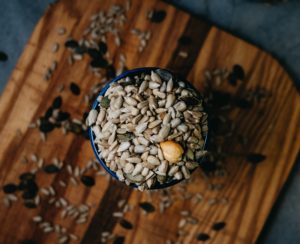
    1. Seeds: Make chia pudding with chia seeds. Top salads and soups with sunflower, hemp, pumpkin, or ground flax seeds.


    1. Beans: Mix in beans to whatever recipe you’re already making. Cannellini beans are perfect in Italian or Mediterranean dishes. Pinto beans taste great in Asian dishes. Add black beans to salads. Experiment with adzuki beans and lentils in soups. And of course, chick peas for homemade hummus.


    1. Nuts and Nut Butters: Add crushed peanuts to Thai curry, slivered almonds to stir fry recipes, and walnuts to salads. You know almond butter is amazing. Have you tried sunflower seed butter or cashew butter?


    1. Protein Powder and Powered Peanuts: My favorite protein powder is Sunwarrior.  In addition to making smoothies, protein powder can be added to chia pudding or overnight oats. If you like peanut butter you’ll love PB Fit. Use it in place of peanut butter in recipes and smoothies.


    1. Grains: Amaranth has more protein, iron, and magnesium compared to quinoa. It tastes great in savory or sweet dishes, like a porridge. Quick Cook Oats are perfect for overnight oats. Teff is another yummy, nutritious, gluten-free grain.


    1. High Protein Almond Milk: Orgain Almond Milk has 10 grams of protein per cup and is thicker than regular almond milk, which only has 1 gram. It makes a great coffee creamer and is another way to increase protein in smoothies, chia pudding, and overnight oats.


    1. Bars: When you need a snack on the go or you want a sweet treat, grab a No Cow Protein bar. 


    Alicia Cross is a Certified Personal Trainer, Wellness Coach, and Yoga Instructor with more than 15 years’ experience working with clients in classes and one-on-one.  She is a yogi, meditator, vegan, and lifter of heavy things. If you’re ready to discover the strength and peace that comes from within, email Alicia@AliciaCrossTraining.com.


    Related Posts:

    Fix Your Nutrition in 10 Steps

    The Cheese Defense


  • Create Your Home Gym for Less Than $500

    Thinking about creating a home gym? You don’t need to spend a ton of money on a bunch of fancy equipment and you don’t need a lot of space.  You can get a great workout at home with a one-time investment of $400-$1000.  Here are my top picks for your home gym:


    Manduka Pro Mat $90 Don’t forget a pair or 3″ or 4″  blocks   $20.  You’ll never buy another mat again!  This durable mat provides the right amount of cushion for your joints without the instability that comes with thick exercise mats.


    Core Ball $15 You’ll love the challenge this small, inexpensive piece of equipment adds to your core exercises.


    Stability Ball $18 How else are you going to do hamstring curls?


    Thera Bands (2 packs) $20 Improve your posture and help alleviate neck and upper back pain with these bands. Don’t forget these door anchors for your bands!


    Monster Bands Light (orange) $8, Medium (red) $13, Heavy (black) $18 Perfect for strengthening the lower body and back and for deep stretches. Stay on your routine while travel by packing these lightweight, yet powerful bands.


    Mini Bands $11 Knees bothering you? Add banded clams and lateral band walks to your routine to strengthen the outer hips and protect the knees.


    Screen Shot 2020-07-09 at 1.07.26 PM

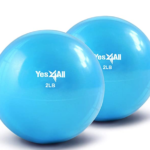
    I’ve had my 2lb Weighted Pilates Balls for years. They’re perfect when you need a light weight. And the shape makes them great for grip strength.


    Foam Roller $12 Don’t forget LAX ball $8 With all your hard work in your new home gym, you’re going to need to roll away the tension.


    Step Bench $70 with extra Risers $30 If you don’t have a sturdy bench or chair, get this square bench.  It’s perfect for tricep dips, step ups, and hip thrusts.


    Gliders $10 These work on carpet and hard floors.  Eliminate the impact on your joints and increase the work to the thigh muscles with exercises like glider lunges.  Work your core and get your heart pumping with glider mountain climbers.


    Jump Rope $12 If it’s right for your space and your body, jumping rope can be a great warm-up or part of a full-body circuit session.


    Splurge Items

    If you have a bit more to spend on your home gym, check these out:


    2kettlebellsA heavy Kettlebell. Check here, here, here, here, here, and here. How heavy? If you’re going to be swinging the bell, it needs to be too heavy for your arms to lift (KB Swings come from the hips and legs, NOT the arms). If you have a good strength base, females can start with 20-25lb (8-12kg) and males can start with 25-30lbs (12-16kg).


    BOSU $100 or a Balance Pad $24 The BOSU is a cool piece of equipment that can add a fun balance challenge to traditional exercise like lunges, pushups, planks, and burpees.  It can also help make crunches and sit-ups more comfortable on your back.


    Adjustable Dumbbells $256 If you want to use weights but don’t have space to store them all, these are perfect.  They adjust quickly and easily.


    TRX $169 I absolutely love TRX.  It’s perfect for everybody.  You can modify exercises if you are a beginner and you can really challenge yourself if you are a pro! No installation required. It hangs over the door with the included anchor. If you want to install TRX to a wall or ceiling, use this.


    Now that you have everything you need to get started on your new at-home fitness routine, what are you waiting for? Don’t know what to do with your equipment? I can send you workout programs to help you reach your health and fitness goals. Email me today!


    Alicia Cross is a Certified Personal Trainer, Wellness Coach, and Yoga Instructor with more than 15 years’ experience working with clients in classes and one-on-one.  She is a yogi, meditator, vegan, and lifter of heavy things. If you’re ready to discover the strength and peace that comes from within, email Alicia@AliciaCrossTraining.com.


    Related Posts:

    The 5 Biggest Mistakes You’re Making at the Gym

    What is Fitness?


    As an Amazon Associate I earn from qualifying purchases.

  • The 5 Biggest Mistakes You’re Making at the Gym and the Solutions

    Here are the five biggest mistakes I see at the gym and ways to avoid them:


    1. Not properly warming up and/or cooling down

    stretchingguyThe first big mistake I see happens at the beginning of the workout: neglecting to warm up or starting with static stretches. These are probably the same people who leave without cooling down.


    The Solution: Beginning each workout with dynamic stretches to get mentally and physically ready to work, to help prevent injury, and to get more out of every workout. If you’re feeling really tight or cold, do a quick five minutes on the elliptical or treadmill before dynamic stretches. Post-workout is the perfect time for static stretches or self-myofascial release with a foam roller. Plan five to ten minutes each for the warm up and cool down and devote the rest of your time to your workout.


    1. Lack of Programing:

    agendaOften, I see people starting with random exercises, like bicep curls, then jumping around without out a plan.  Or maybe they’re following the layout of the machines rather than a program. Many people do not understand that in addition to exercise selection, volume (the number of repetitions), intensity (the amount of weight), and rest (the time between sets) are variables that change based on the goal.

    The Solution: The first step is to have a goal. Know why you are there and where you want to go.  If you have general fitness goals, begin with a warm up (see number 1). Then move on to compound, multi-joint movements like squats, deadlifts, or presses. End with accessory work, such as biceps, triceps, leg extension, or core.  For most people, completing three sets of twelve repetitions and resting for about two minutes will do. Always do cardio after weights. And if you’re taking Yoga, save that for the very end.


    1. Exercising for weight loss or flat abs

    belly-2473_1920People ask me what exercises will get rid of belly fat. No exercise will get rid of fat anywhere on your body. The hard truth is that weight loss happens in the kitchen. You cannot out-exercise a bad diet.


    The Solution: Exercise, including strength training, cardio, and core training, is absolutely necessary for health.  However, if anyone claims that an exercise, a program, or a piece of equipment will lead to weight/fat loss or will trim inches off your waistline, don’t believe it. If it sounds too good to be true, it is. Follow my 10 tips to fix your nutrition to see the changes you’re looking for.


    1. Prioritizing weight over technique

    I’ve see questionable squats and deadlifts that made my back hurt just looking at them.

    via GIPHY

    The Solution: Getting sloppy with dumbbell rows or curls, not maintaining full depth in the squat rack as the weight gets heavier, and always deadlifting with a rounded back, will take its toll on your joints. Remember your long-term goals: While it may seem like a victory to move that much today, down the road when your training is sidelined by a serious injury or nagging pain, you’ll wish you would have worked on your mobility, core stability, and body awareness before adding weight.


    1. Relying too much on machines

    Sitting or lying on machine does nothing for your core or your balance.  And the movements do not transfer to the movements you make during daily living.

    The Solution: Nothing beats free weights, bands, and body weight exercises. Instead of the leg press machine, sit down on a box and stand up. This prepares you for functional movements like getting out of a chair or off the toilet.  Instead of a seated press, do elevated pushups on a bench. This trains your core stabilizers which will help keep your back safe all day long. Instead of working back, shoulders, and arms with machines, try bands, dumbbells, and the TRX. This allows the shoulder to move through a full range of motion, keeping your joints healthy and supple for all the movements you make throughout your day.


    Avoid these common mistakes in your training to stay safe, reach your goals, and see the results you want.  What other mistakes do you see at the gym?

    Alicia Cross is a Certified Personal Trainer, Wellness Coach, and Yoga Instructor with more than 15 years’ experience working with clients in classes and one-on-one.  She is a yogi, meditator, vegan, and lifter of heavy things. If you’re ready to discover the strength and peace that comes from within, email Alicia@AliciaCrossTraining.com.

    Related Posts:

    What is Fitness?

    Weightlifting Belt for Back Pain?