Each month, print a new copy of your Success Calendar.
Blog
-
What is Mobility?
What is Mobility?
Mobility is defined simply as the ability to move. When trainers and coaches talk about mobility, though, we have a more specific definition in mind: We mean the ability to safely and effectively move through exercises like squats, deadlifts, overhead presses, cleans, snatches, and more. We want to see proper alignment and movement patterns. This means that in a particular joint we are looking for stability, full range of motion, and no compensations elsewhere in the body.
In an overhead press, for example, do you have full range of motion in the shoulders, or are you compensating by excessively arching your lumbar spine or elevating your shoulders all the way up to your ears? Are your joints stable, wrists neutral, and elbows unlocked? If not, your trainer will tell you that you need to work on your shoulder mobility.
How Do You Improve Your Mobility?
Your mobility training program will include exercises, stretches, and myofascial release techniques geared toward building kinesthetic awareness and correcting dysfunctional movement patterns. The first step is always awareness. You cannot correct a problem if you are unaware that it exists. Your trainer will build your body awareness through exercises such as cat and cow (flexion and extension of the spine) so that you learn what a neutral spine feels like. In certain positions, a neutral spine may be compromised by tight muscles in other parts of the body, such as the hamstrings. If that’s the case, your trainer will teach you how to properly stretch the hamstrings and demonstrate how a lacrosse ball or a foam roller can be used to help relieve tension in those muscles. If you are unable to maintain a neutral spine because of a weak core, your trainer might recommend exercise such as planks to build core strength.
Mobility Training is Holistic:
A perfect example of this is the knees: Like many clients, you may have knee pain, not only during exercises or cardio but also throughout your normal daily routine. Rather than addressing the knees specifically, trainers and coaches know you need to work on opening the hips, stretching the calves, and strengthening the glutes with exercises such as bridges and deadlifts.
If back pain is your issue, trainers can help you alleviate upper back pain by showing you how to correctly stretch the chest and shoulders in addition to strengthening the upper back muscles. For the lower back, trainers will help you strengthen the core and glutes, and also stretch hip flexors, hamstrings, and shoulders.
Don’t wait until you have a problem, pain, or injury. Mobility training is preventative as well as corrective. If the body moves correctly through the demands you put on it in and out of the gym, you can reduce the risk of acute and overuse injuries.
More Specifics on Mobility:
Mobility training address issues of the soft tissues (muscles and connective tissues), joints, and motor function to reduce misalignments, muscular imbalances, and compensations in order to eliminate dysfunctional movement patterns.
There are three main components of mobility training are stretching, corrective exercises, and myofascial release.
- Stretching:
- Static Stretching: holding a stretch for 30+ seconds, usually post-workout.
- Dynamic: continuously moving in and out of a stretch, usually pre-workout.
- Assisted: joint distraction or traction with bands, or using sandbags, weights, or straps to maintain alignment, decrease compensations, and increase range of motion in a stretch.
- Passive: joint mobilization by a professional (certified personal trainer, physical therapist, massage therapist, Thai massage practitioner).
- Corrective Exercises: Often with bands
- Myofascial Release:
- Self-Myofascial Release (SMR) with foam roller, lacrosse ball, Thera-Cane or other tools.
- Soft tissue manipulation by a professional (physical therapist, massage therapist, Thai massage practitioner).
Benefits of Mobility Training Include:
- Improved daily function (feel better and have more energy all day long)
- Improved athletic performance (improve your run time and PR’s)
- Aides in recovery (which means more time spent working toward your goals)
- Decreased muscle pain and tension
- Reduced risk of overuse and acute injuries
Email me to find out how to include mobility training into your routine so you can reach your goals safer and faster.
Alicia Cross is a Certified Personal Trainer, Wellness Coach, and Yoga Instructor with more than 15 years’ experience working with clients in classes and one-on-one. She is a yogi, meditator, vegan, and lifter of heavy things. If you’re ready to discover the strength and peace that comes from within, email Alicia@AliciaCrossTraining.com.
Related Post:
- Stretching:
-
What is Thai Massage?
What is Thai Massage? How is it different from Swedish or Deep Tissue Massage?
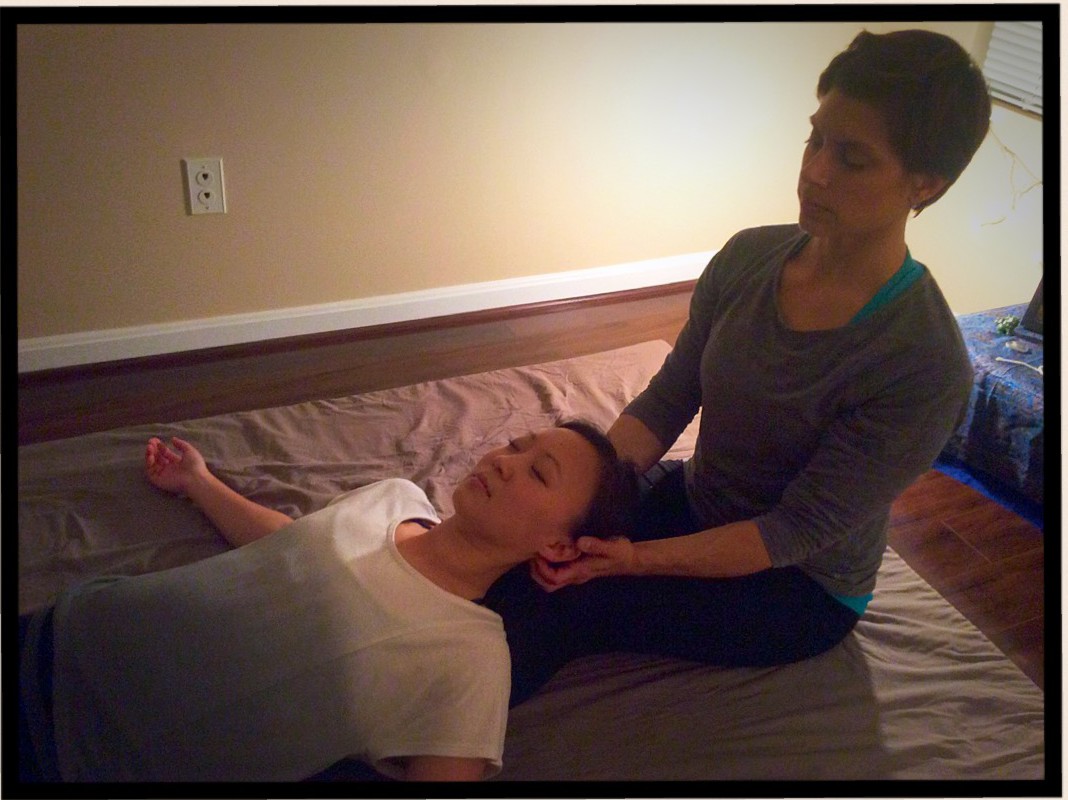
Short answer: The session is done fully clothed on a mat on the floor. It involves acupressure/compressions with the practitioner’s thumbs, fingers, hands, elbows, forearms, knees, and feet. The practitioner moves the client through a series of stretches that look like yoga poses. People often say that it’s like having someone do yoga to you.
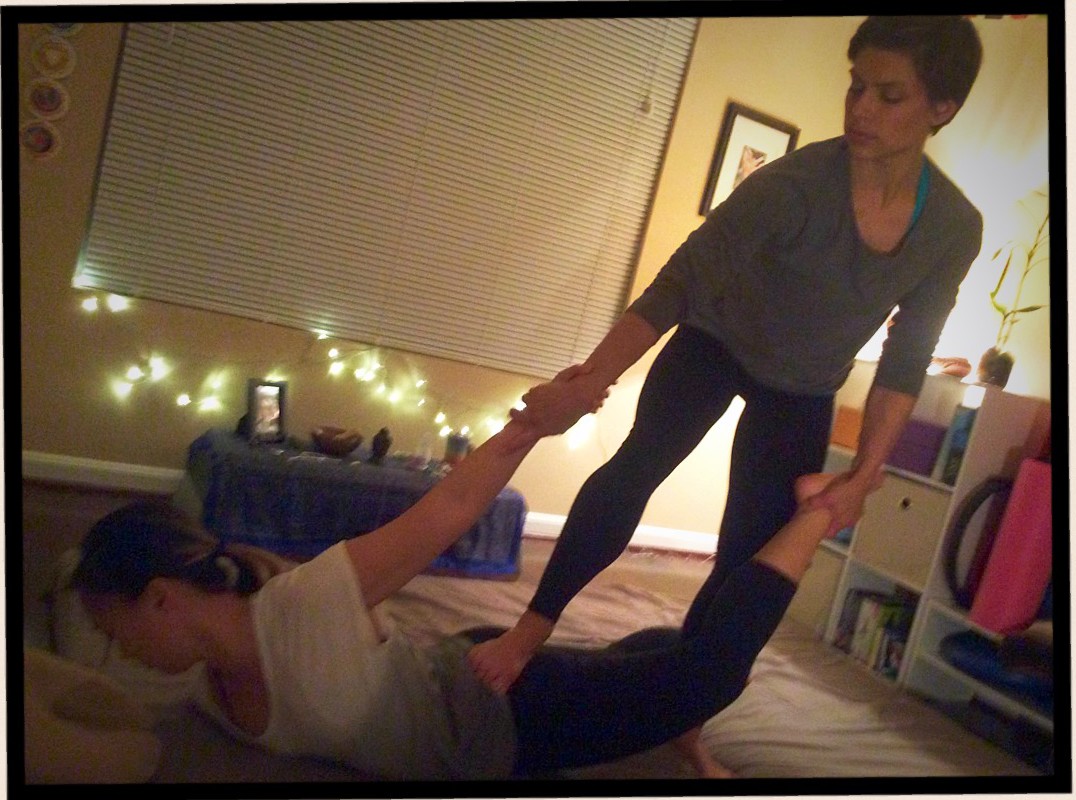
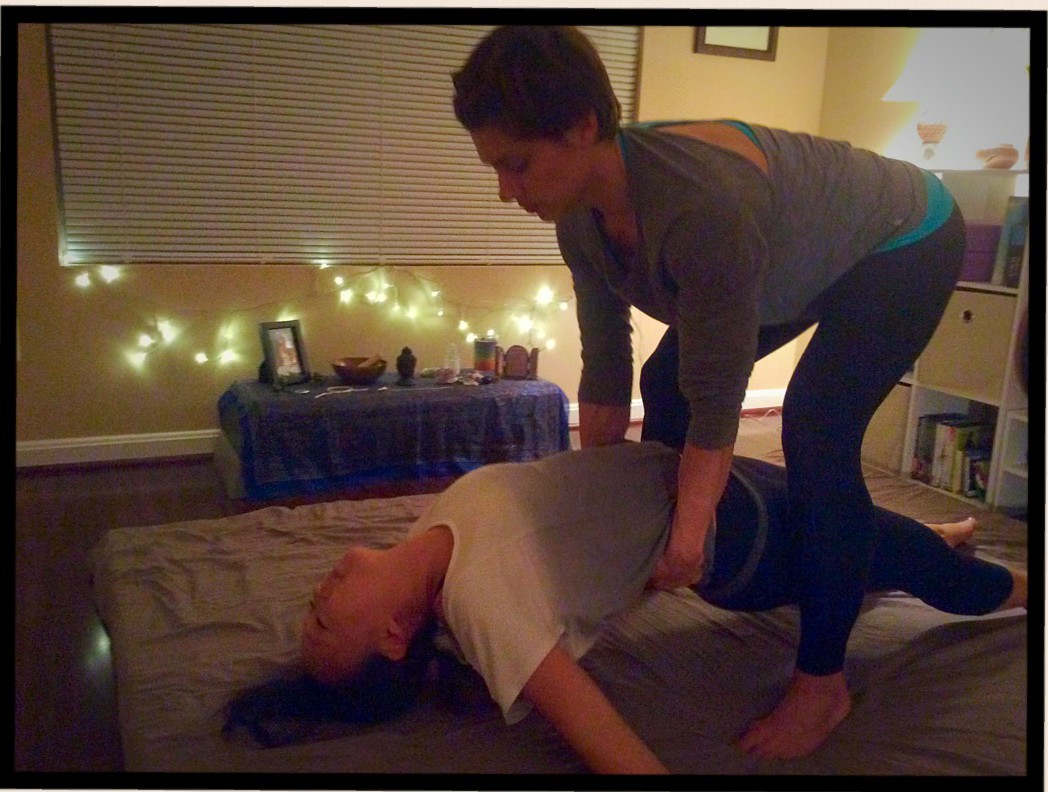
More Info: Nuat Thai or Thai Massage (also called Thai Yoga Massage, Thai Therapy, or Thai Stretching) is one of the three branches of Traditional Thai medicine:
- ENERGY (Thai Massage)
- PHYSICAL BODY (medical doctors and herbal medicine)
- MIND/HEART (Monks)
Here in the West, we are experts at caring for the physical body and we’ve got mind and heart covered. All of the energy work, however, has been adopted from the East: Yoga, Thai Chi, Acupuncture, Reiki, and Thai Massage. These practices address the blocked and imbalanced energy that causes dis-ease in the physical and emotional body.
Thai Massage releases the blocked energy through the application of compressions and stretches. The energy, or LOM, moves by way of the 72,000 SEN lines. This is akin to the prana that flows through the nadis in Ayurvedic medicine and qi that travels via meridians in Chinese Medicine. Through the practitioners intention, movements, and breath, s/he becomes a conduit. This allows for the release and flow of energy which facilitates the client’s own ability for self-healing.
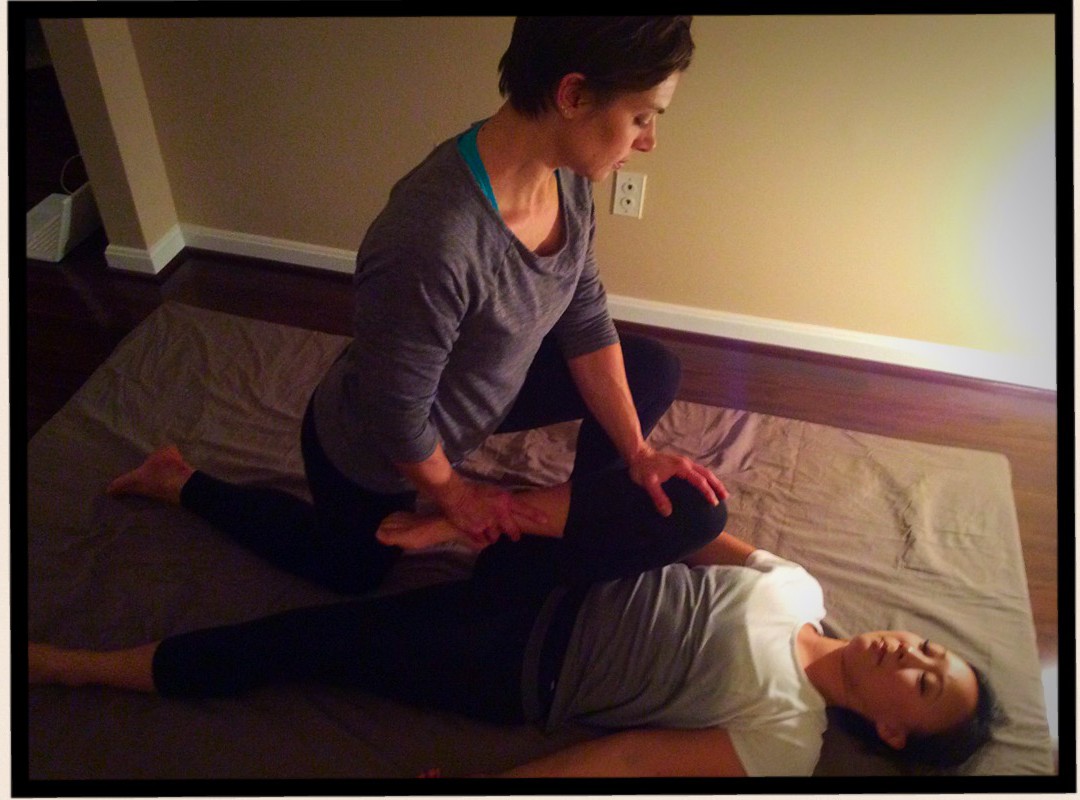
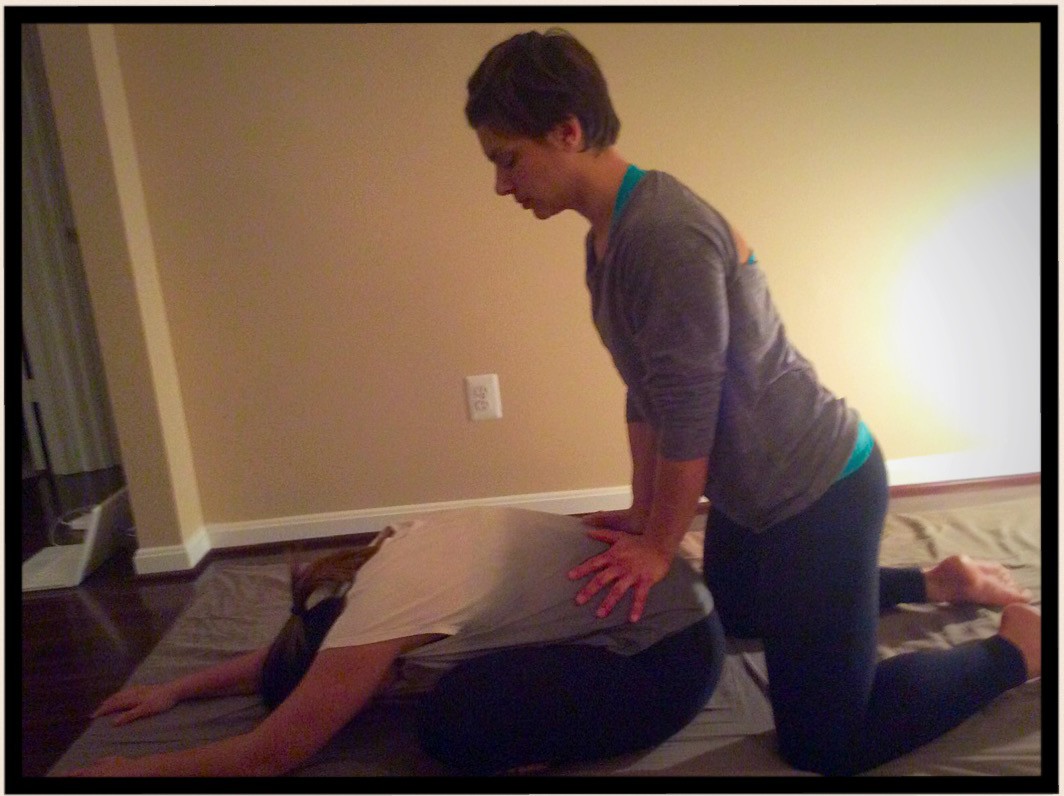
Thai Massage has been cultivated for centuries from many different influences:
- Most importantly, the therapy’s roots go back 2500+ years with indigenous Thai healing practices, like back walking and shaminism.
- 543 B.C.E., Theravada Buddhist contributed ideas like compassion (Metta) and a focus on the breath.
- Between 300 and 500 C.E., Ayurvedic medicine introduced the four elements (Earth, Water, Fire, and Air). Lom, the word for the energy, actually means air.
- Between 600 & 1200 C.E., the Thais adapted Hatha Yoga to create Thai Yoga (luesii dat ton or self-stretching) to assist with their meditation practice. The stretches then became part of the Thai Massage.
- 700 C.E., Chinese medicine and concepts like the meridians help shape the ideas of the sen lines.
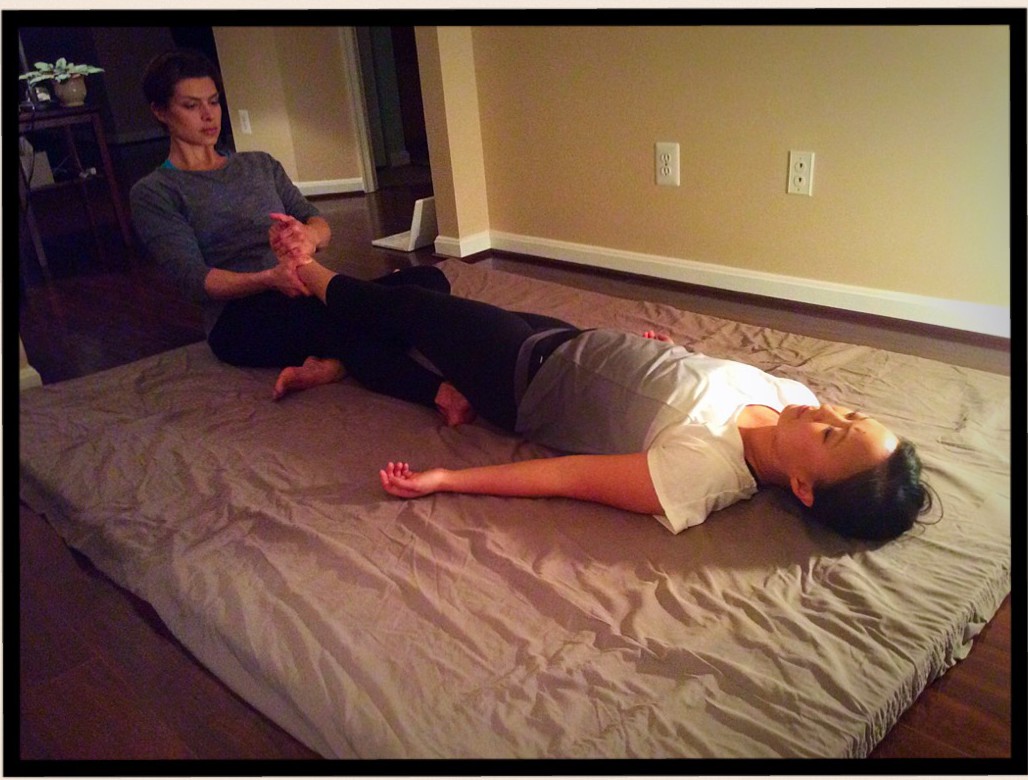
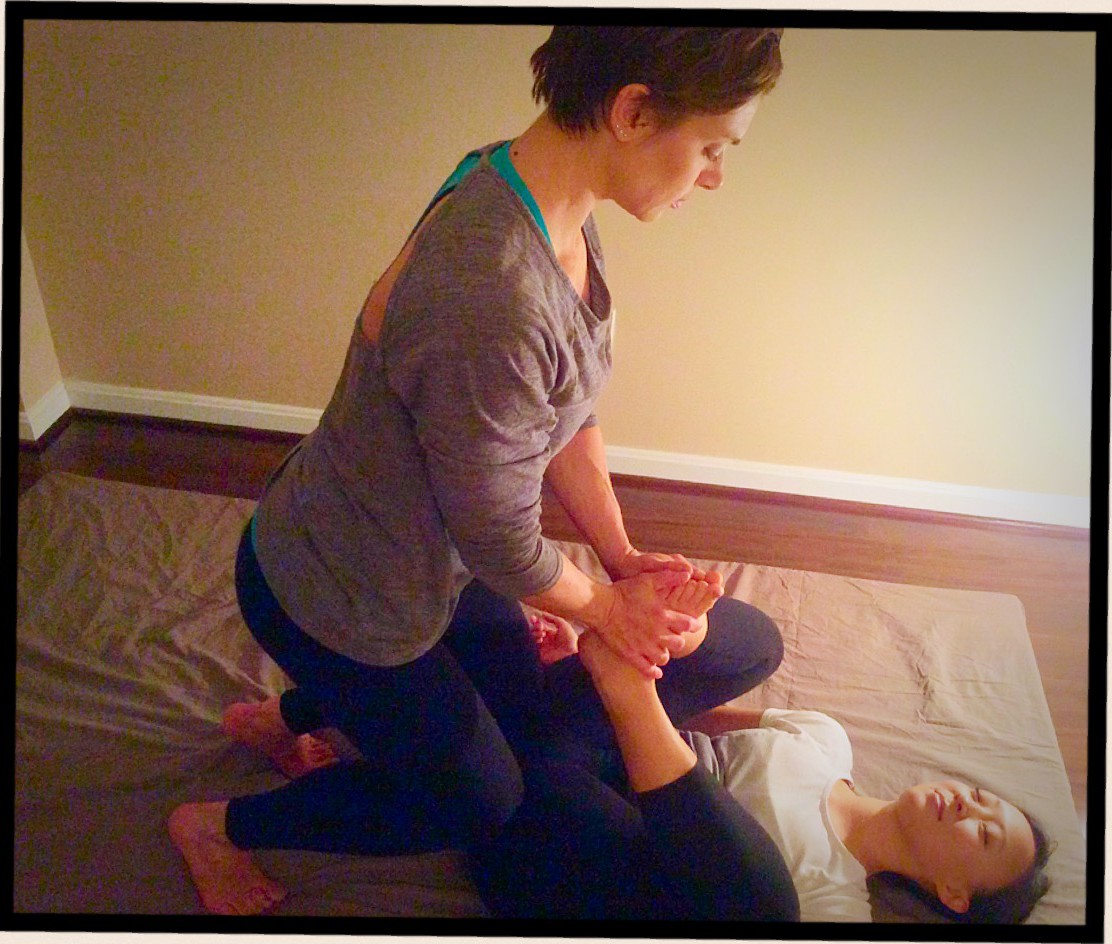
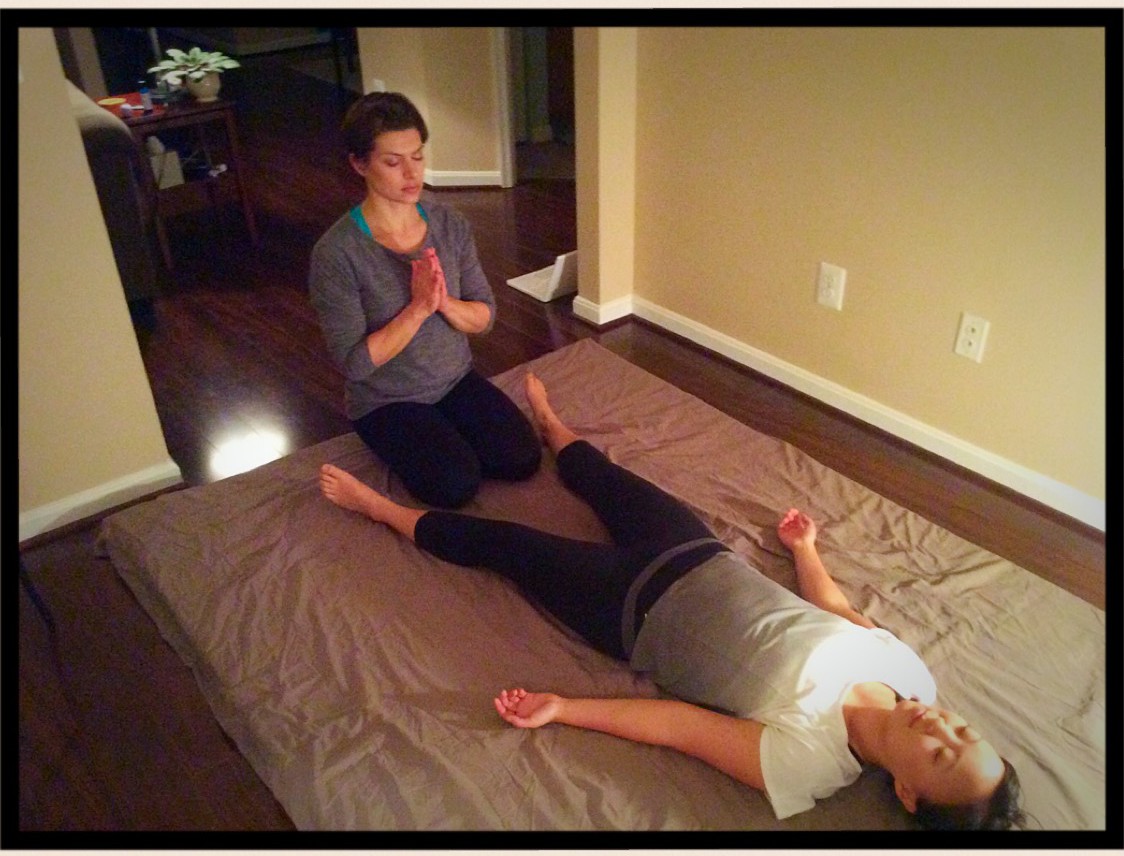
The most important concept by far in Thai culture and Thai Massage is the idea of METTA, or “lovingkindness.” This is the compassion the practitioner feels for his/her client. It is a wish of health, happiness, peace, and safety for the client. Through this intention and the focus on breath, Thai Massage becomes an energy practice and a meditation for both client and practitioner.
Alicia Cross is a Certified Personal Trainer, Wellness Coach, and Yoga Instructor with more than 15 years’ experience working with clients in classes and one-on-one. She is a yogi, meditator, vegan, and lifter of heavy things. If you’re ready to discover the strength and peace that comes from within, email Alicia@AliciaCrossTraining.com.
-
Q&A:Two-A-Days
Q: Do you think it’s possible that my body feels physical stress when I work out more than once a day? For example, working out at noon and then spinning at 4:30? I’m thinking about this because I couldn’t spin today and I feel really good and not exhausted at this point in the day like I normally do. I may be way off on this but I thought I would throw it out there and ask your opinion on it.
-K.H.
A: Great question and you are actually not way off. Exercise IS a form of stress on the body. When done correctly, however, it can be good for us. As a result of exercise, we see improvements in:
- blood pressure
- resting heart rate (decreases)
- blood cholesterol levels
- body composition
- immune function
- cardio-respiratory function
- bone density
- muscular strength and endurance
- joint function, stability, and flexibility
- coordination and balance
- ability to manage stress
- mental alertness
- overall energy, sense of well-being, and self-confidence
If we are not exercising correctly (overtraining, under-fueling), we feel tired, run-down, stressed, we experience pain or injuries, we get sick more often, and we don’t see and feel the results the results we are looking for: looking better, getting stronger, improving our endurance.
We can ensure we are not overtraining by:
- following a progressive, periodized strength and cardio-respiratory training program
- taking rest days (1-2/wk)
- practicing yoga (2 days/wk)
- foam rolling/self myofascial release (at least 4 dys/wk)
- monitoring heart rate during cardio-respiratory training:
I recommend wearing a heart rate monitor during cardio-respiratory training. Train no more than 2 days per week in the higher intensity/anaerobic Zones 2 & 3 (75-92%max HR). Train at least 1 day per week in Steady State/aerobic Zone 1 training (65-75%max HR). If we train more than 1 day per week in Zone 1, that will replace a Zone 3 training day. Zone 1 training is where we improve our endurance, strengthen our heart and lungs, aide in recovery, and train our bodies to efficiently burn fat all day long for fuel. Remember when we are anaerobic in Zone 2 and 3, we are burning mostly carbs, which is not how our body works at rest.
We also want to monitor our resting HR. It should go down as a result of effective training. Check resting heart rate in the morning. If it’s elevated, the body hasn’t finished recovery from the previous day’s session. The heart rate remains elevated because we are still in EPOC: Elevated Post-exercise Oxygen Consumption, i.e. burning more calories than usual. EPOC can last 24-36 hours after training. It is longer following higher intensity interval training. This the time when the body is repairing tissue, building muscles, and replenishing glycogen stores after a strength or cardio session. We need rest and fuel (CARBOHYDRATES) to get that done.
With proper training, we can be successful at two-a-days, but like anything else we need a progressive, periodized program to avoid overtraining.
The bottom line is that exercise and fitness should enhance our lives outside of the gym. If you are tired, in pain, stressed, your body is telling you something.
Email me if you have a training question or to find out how personalized programing can help you reach your goals faster and safer.
Alicia Cross is a Certified Personal Trainer, Wellness Coach, and Yoga Instructor with more than 15 years’ experience working with clients in classes and one-on-one. She is a yogi, meditator, vegan, and lifter of heavy things. If you’re ready to discover the strength and peace that comes from within, email Alicia@AliciaCrossTraining.com.
-
How to Use Your Fitness Success Calendar
The Fitness Success Calendar is based on my Cross Fitness Formula:
SUCCESS=NUTRITION+STRENGTH+CARDIO+MOBILITY+RECOVERY
In order to be successful, you need the correct balance of these components in your routine. I designed the Calendar to help you easily stick to your plan, see what’s missing, and be aware of possible overtraining.
Nutrition: Set up the free app, MyFitnessPal, and track nutrition 6 days/week. Allow yourself one day each week free of tracking. This free day, in addition to healthy meals all day long, will be the day of that one meal that doesn’t need logging. This meal (some call it a “cheat meal”) is your reward for all of your hard work at the gym and in the kitchen all week long. You earned it, so enjoy it and don’t count calories. Instead think about all the energy it’s giving you for the next day’s workout. The other 6 days of the week, log everything, including water. Each day, use the totals from MFP to fill in the Success Calendar boxes with the total number of calories, grams of fiber and macronutrients, and water. Compare your number to your goals each day. Not sure how many macros and kcals you need each day? Customize your calendar with CROSS CHECK Fitness and Nutrition Assessment.
Strength: Mark the box or write a key word (examples: upper, lower, back squat, cleans) for each day you complete you strength train. I recommend 2-3 days/week for most people. Please note that strength training does NOT include classes like TBC, Bootcamp, or any other circuit style workouts or classes. I have included 1-2 days of core training under strength. This might be done as part of your strength training with exercises such as planks, T2B, Palloff Press, or it might be done stand alone and in classes like Pilates. Mark the box or write a key word on the days you complete your core training. Spending most or all of your gym time in classes or on the cardio equipment and not getting results? I can get you on a strength training routine with CROSS COACHING or I can help you stay safe and reach your goals faster with one-on-one CROSS TRAINING.
Cardio: Cardiorespiratory training includes 2 important categories: Steady State (SS) and Interval. I recommend CR training 3 days/week. Steady State (Zone 1) is the most important and is to be completed 1-2 days/week. It not only prevents overtraining, but also aides in recovery, strengthens your heart and lungs, and trains your body to become an efficient fat burning machine all day long. If you are getting at least 1 day of steady state, you can also get 1-2 days of interval training. Interval training can be done in zones 1 and 2 or in zones 1, 2, and 3. In order to prevent overtraining, higher intensity bouts (H.I.I.T., Spinning, Bootcamp, WOD’s) should not exceed 2 days/week. CR training can be done stand alone or AFTER weights. On the days CR training is done, write a key word and a duration in the box (examples: Spinning 45, SS elliptical 30, WOD 12, Int 20). Remember to always warm up and cool down for about 5-10 minutes before and after any type of CR training. The more intense the session, the more time you’ll spending warming up and cooling down.
Mobility: Read more about this in my blog post. Are you local? Attend my Mobility class at CrossFit W. Springfield. Mobility includes stretching, self-myofascial release with the foam roller, LAX ball, or peanut, and corrective exercises with bands. Mobility training will be completed in some form on all of your strength training days and it might also be completed stand alone. Mark the box or write a key word on the days you complete mobility training.
Recovery: In order to be successful and to avoid overtraining we need 1-2 REST days/week. REST means no strength or CR training. We could, however, go for a walk, stretch, foam roll, or attend a restorative yoga class. Be sure to check those important boxes each week. Of paramount importance is sleep. The body can not recovery without adequate sleep each night. Record the number of hours of sleep you are getting. Lastly, I recommend a massage, Thai massage especially for athletes, 1-2 times each month. It’s only through rest and recovery that we are able to see and feel the results of all of our hard work.
Each month, print a fresh copy of the Success Calendar. Record the date, current weight, body fat percentage, your S.M.A.R.T. Goal and one or two goals for the month. You might start with a monthly goal as simple as meeting your daily water requirement, consistently logging all of your food in MFP, getting to the gym to complete your routine, or practicing yoga 1-2 days/week. For Nutrition Coaching clients, I’ll set a weekly goal for you such as adding more whole grains or legumes each day, eating a post-workout meal within 30 minutes, or eating a 300-400 kcal breakfast every morning.
Use your Fitness Success Calendar to stay on track, see what’s missing from your routine, and ultimately to reach your goals. If you need help, I’m HERE!